
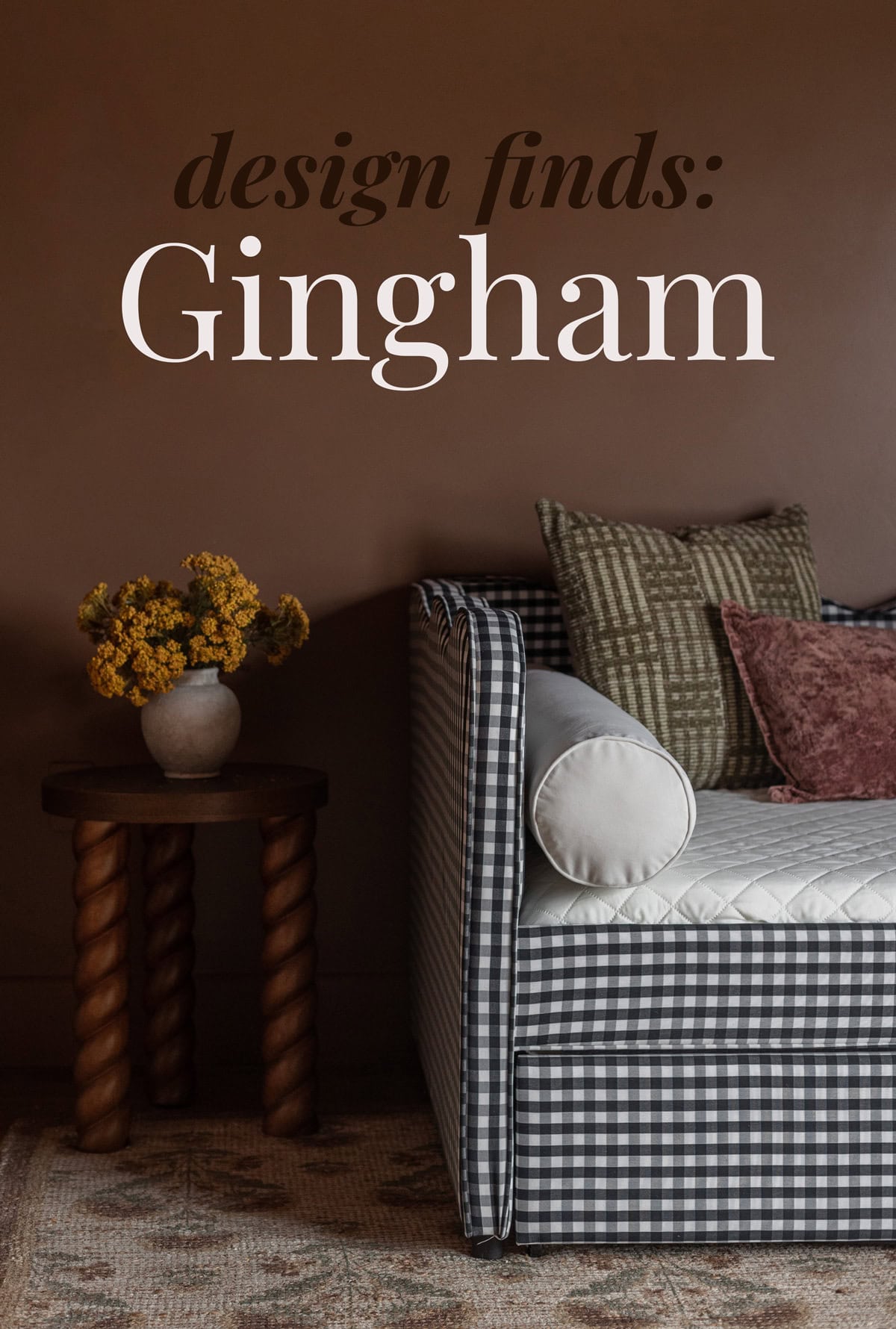
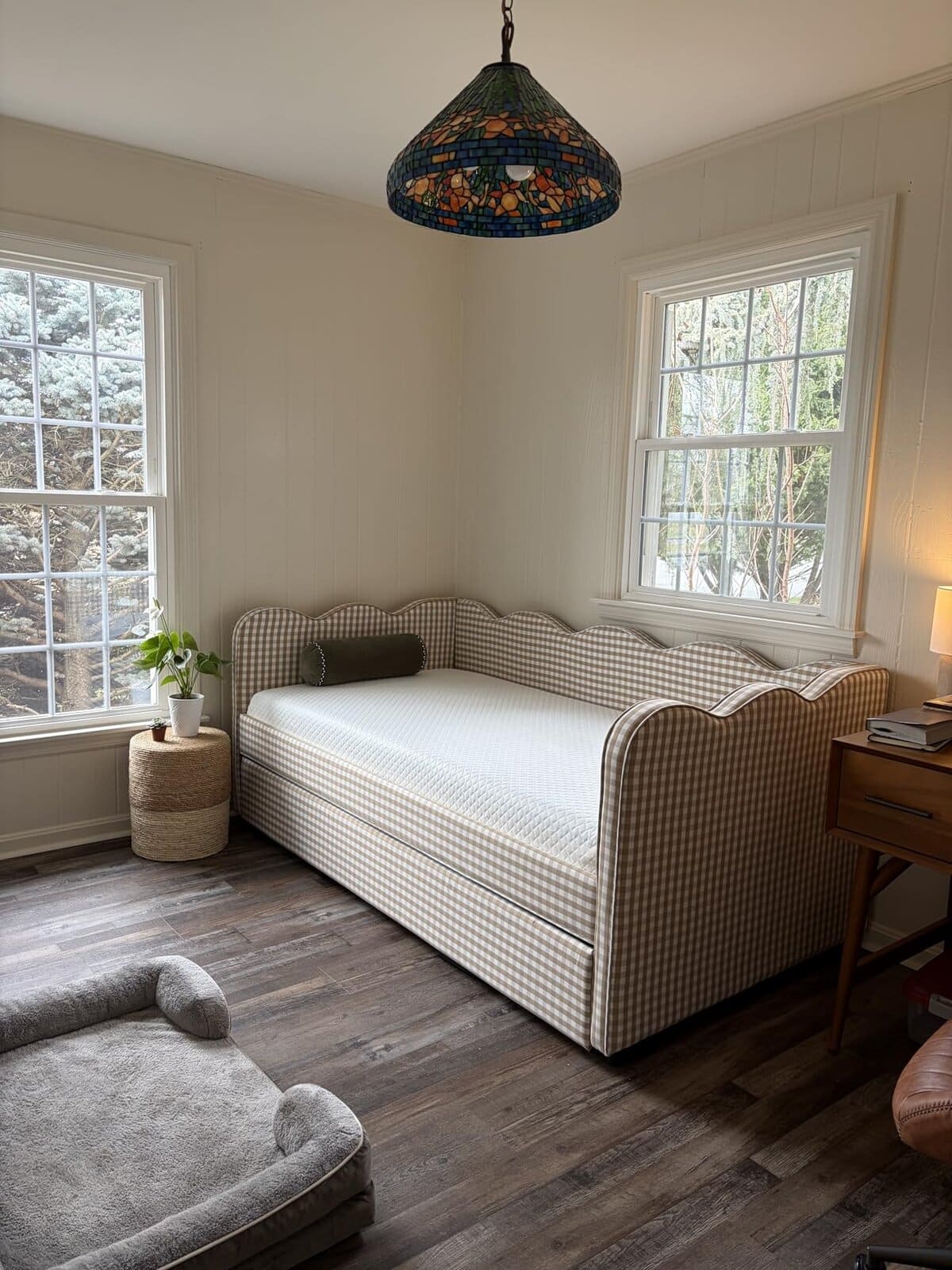
Gingham is having a moment in 2026 as interiors lean back into timeless pattern and quiet character. It’s one of my current design obsessions after finding the most stunning gingham trundle for our recent Twin Bedroom project, and now I feel like I’m seeing it everywhere. Today I’m sharing tips on how to incorporate it into your home, along with a roundup of my favorite finds.
What is Gingham?
Gingham is a simple woven check made from two colors (usually white paired with another hue) laid out in a clean, evenly spaced grid. It’s familiar, timeless, and uncomplicated by design, which is exactly why it has endured for centuries.
Although it’s often associated with country and farmhouse decor today, gingham’s history is much broader. The fabric dates back centuries, with roots in Southeast Asia before becoming widely used throughout Europe. Over time, it became a staple for clothing and home textiles.
Gingham vs Plaid vs Check
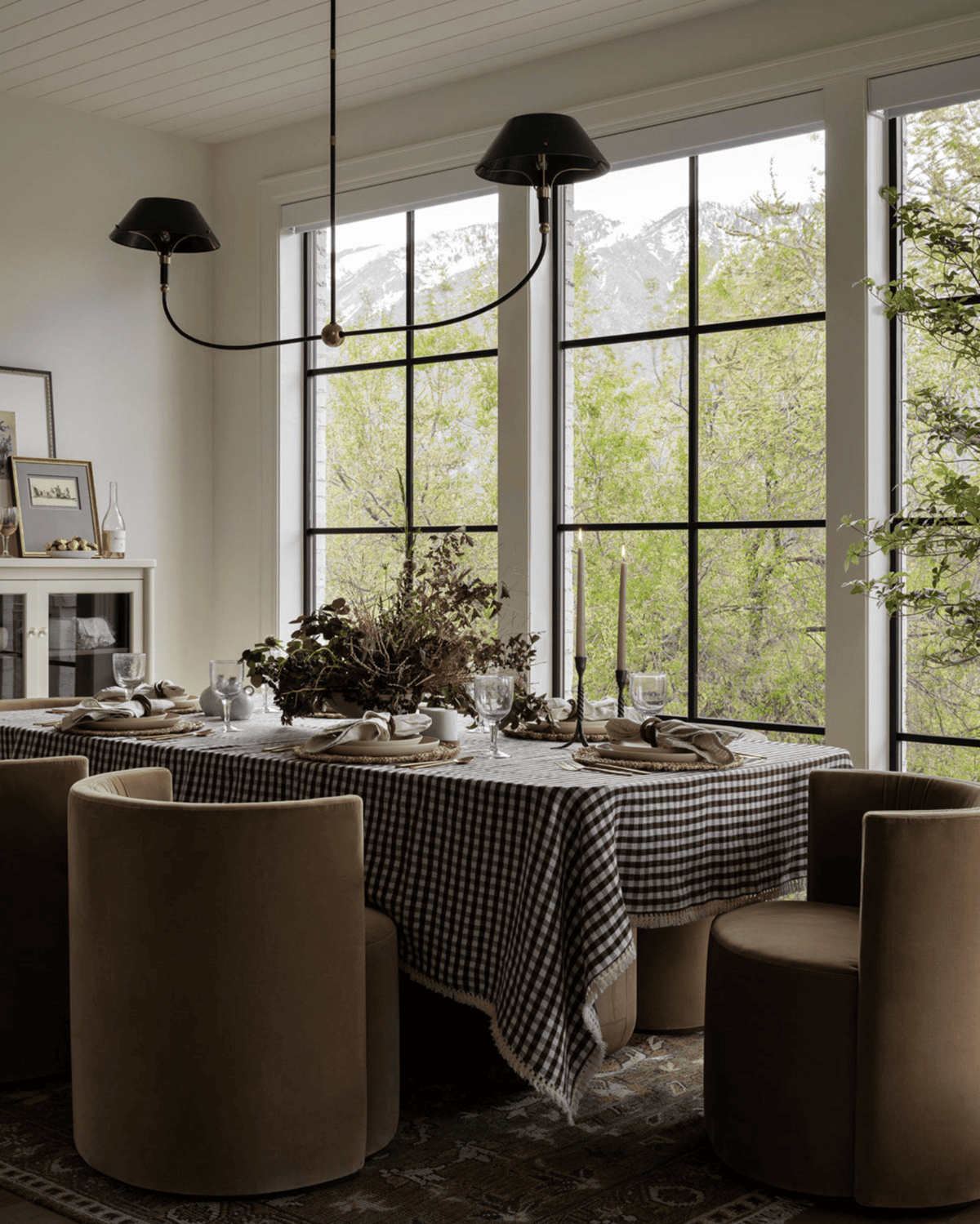
These terms are often used interchangeably, but there is a difference. Gingham uses two colors and evenly spaced checks, giving it a crisp, tailored feel. Plaid is more complex, layering multiple colors and varying stripe widths for a richer, heavier look. “Checkered” is simply a broad descriptor for any grid pattern and can include everything from gingham to buffalo check.
How to use Gingham in your home
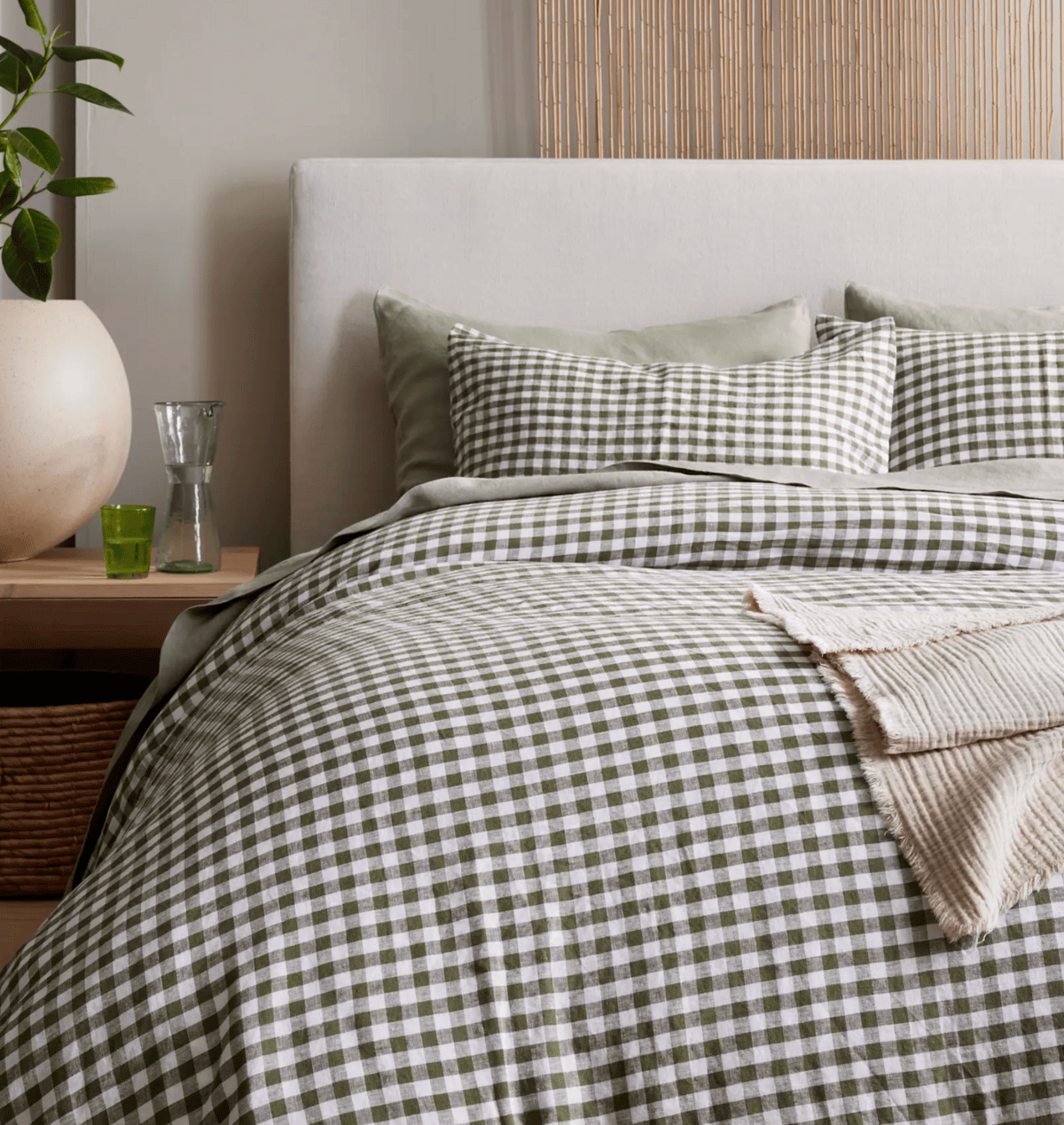
With gingham rising in popularity, you can find it on everything from bedding to table linens, furniture, curtains, art and more. There are a few considerations when choosing what will work in your home.
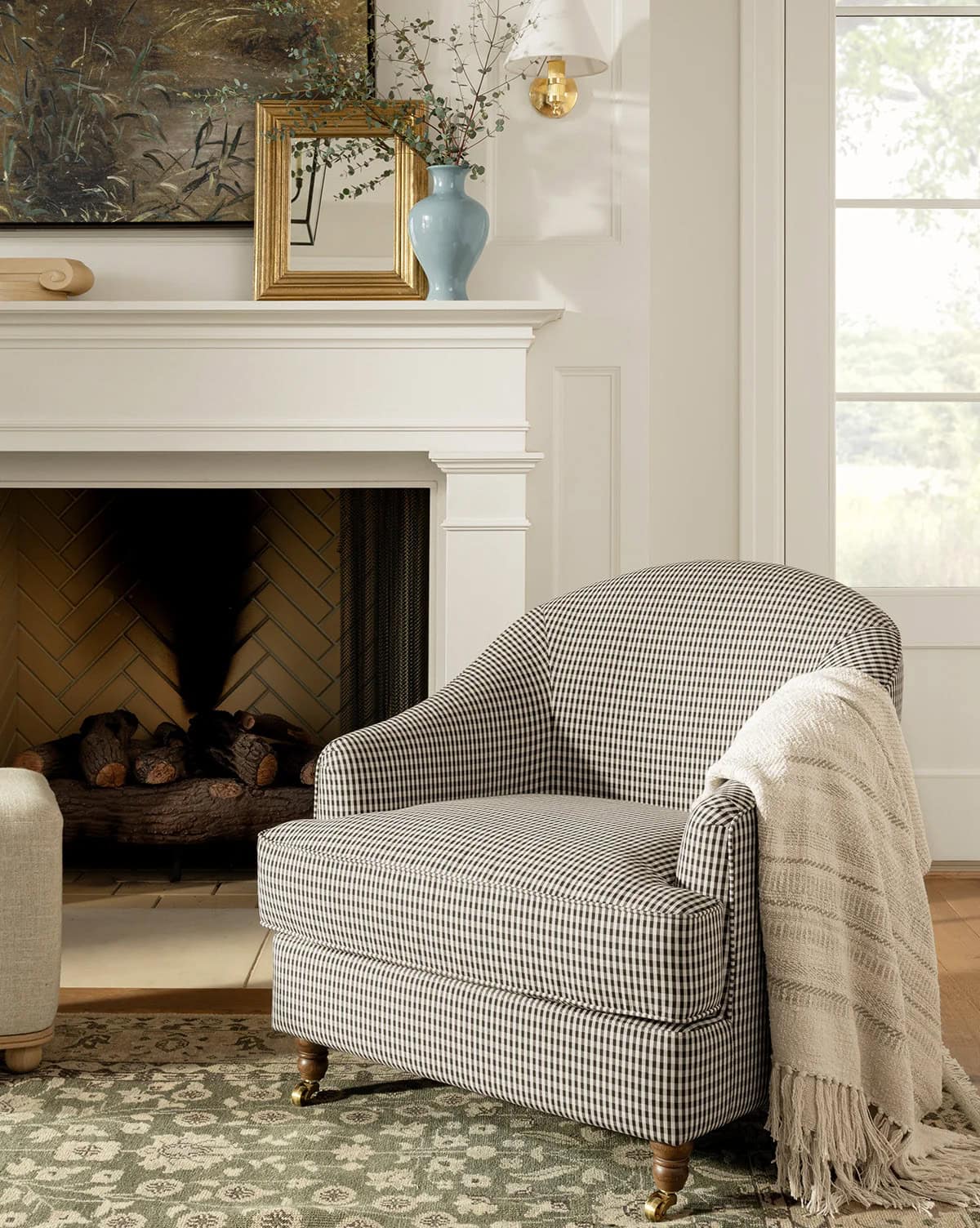
Scale is key. Smaller, tighter checks read more refined and tailored, while oversized versions tend to skew farmhouse and can cheapen the look (IMO). The larger the pattern gets, the more it begins to resemble buffalo check, which is where gingham loses its subtlety.
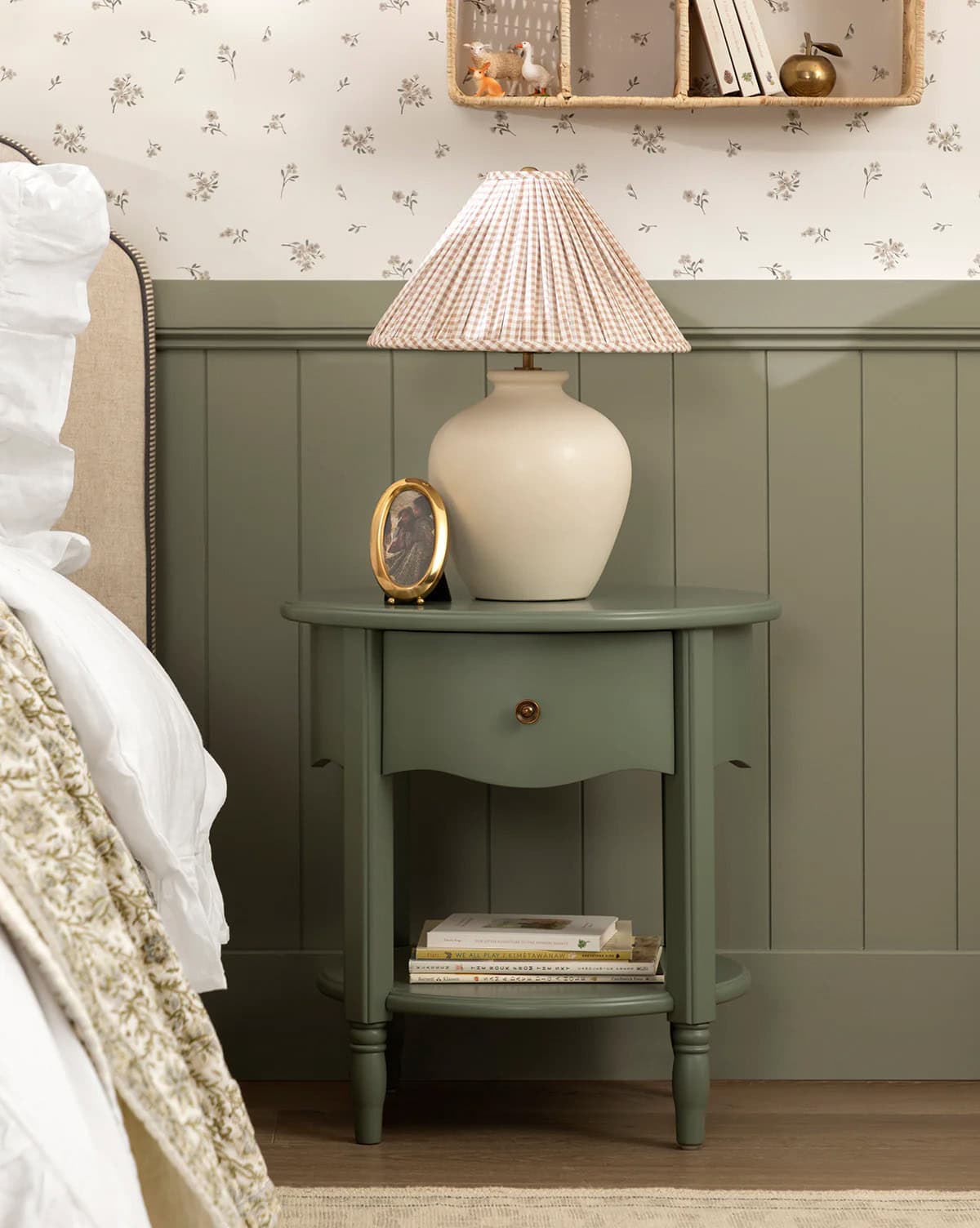
Color choice is just as important. Brighter hues and pastels feel playful, and are best suited for kids spaces. For a more sophisticated look, opt for muted, tone-on-tone palettes like chocolate brown, burgundy, tan, olive green, mustard yellow or other neutrals.
Much like a classic stripe, gingham is incredibly versatile and pairs beautifully with almost any pattern—especially softer, more organic prints like florals. When layered with natural materials such as linen, wood, stone, and aged metals, it feels timeless and intentional rather than trendy.
PSA: while sourcing products for this post, I discovered that our gingham trundle bed is now offered in brown/white! I actually prefer this colorway and am tempted to get a third one for our remaining guest bedroom before it sells out again…
Shop my Gingham Picks
From textiles to rugs and wall decor, there are many ways to incorporate gingham accents into your home. Here are some of my favorites:




Leave a Reply