
This post is part of a paid collaboration with Lowe’s Home Improvement. All opinions are my own.
We’re keeping the DIY’s coming with one of my new favorite simple + budget-friendly “look for less” projects!
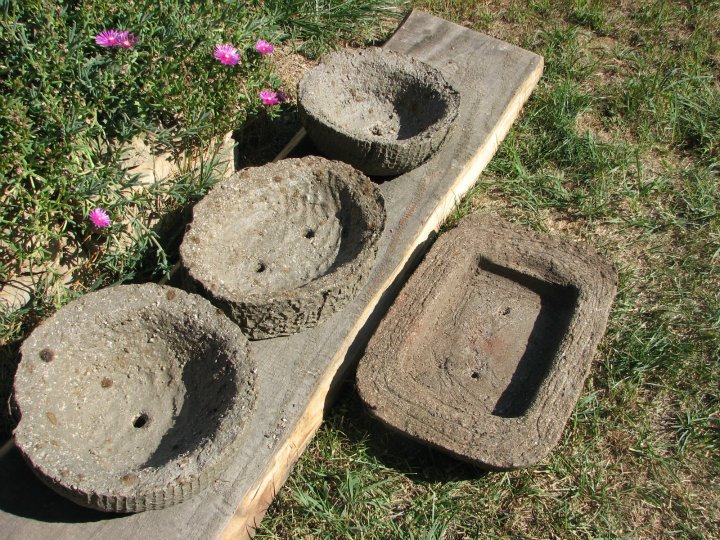
I have been dreaming about these gorgeous oversized limestone planters for months, I’m sure you’ve seen them in high end homes on Instagram and Pinterest…
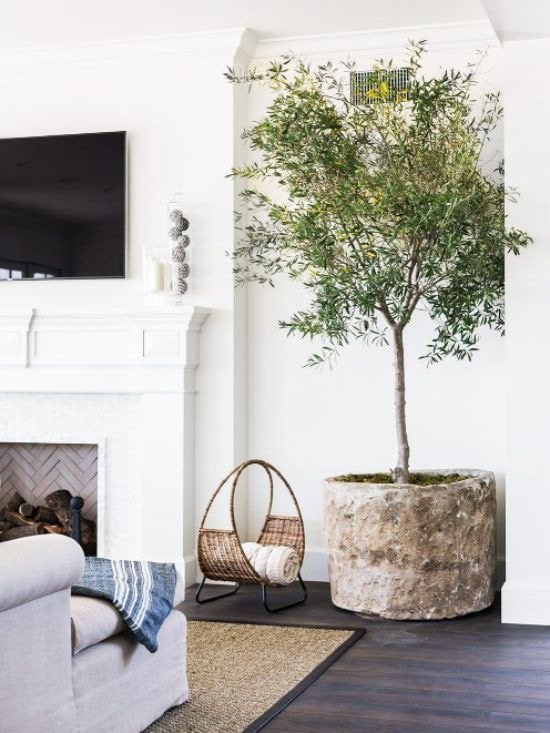
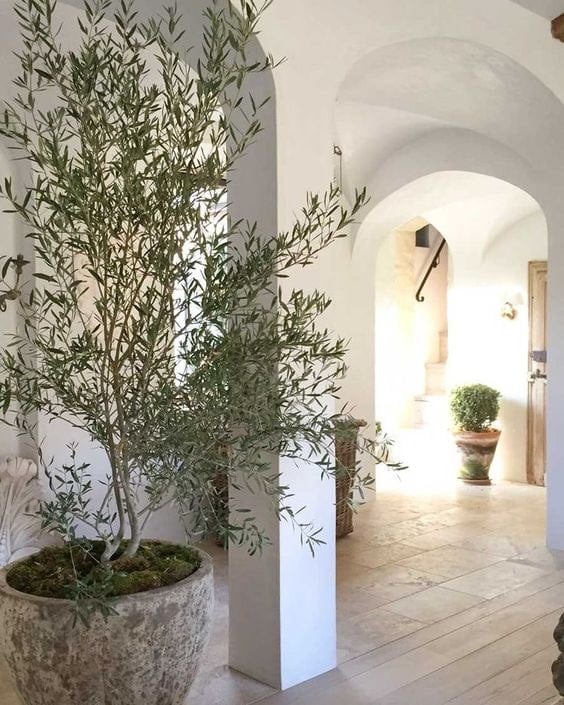
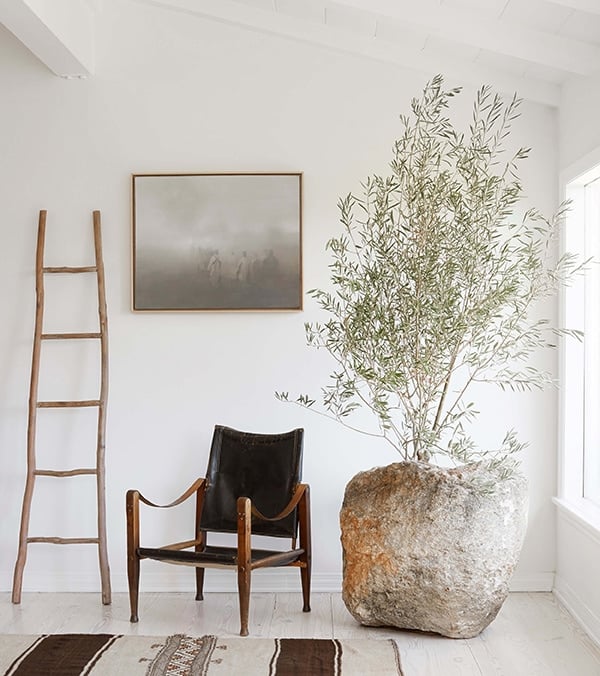
Being the bargain hunter I am, of course I scoured the internet looking to get my hands on one. Turns out they’re not exactly cheap—to the tune of around $3,000 for the size I wanted. That’s a NOPE from me. I knew there had to be a way to recreate this look that wouldn’t cost a small fortune, and after some digging online, I was introduced to the world of Hypertufa.
Jump to:
What is hypertufa?
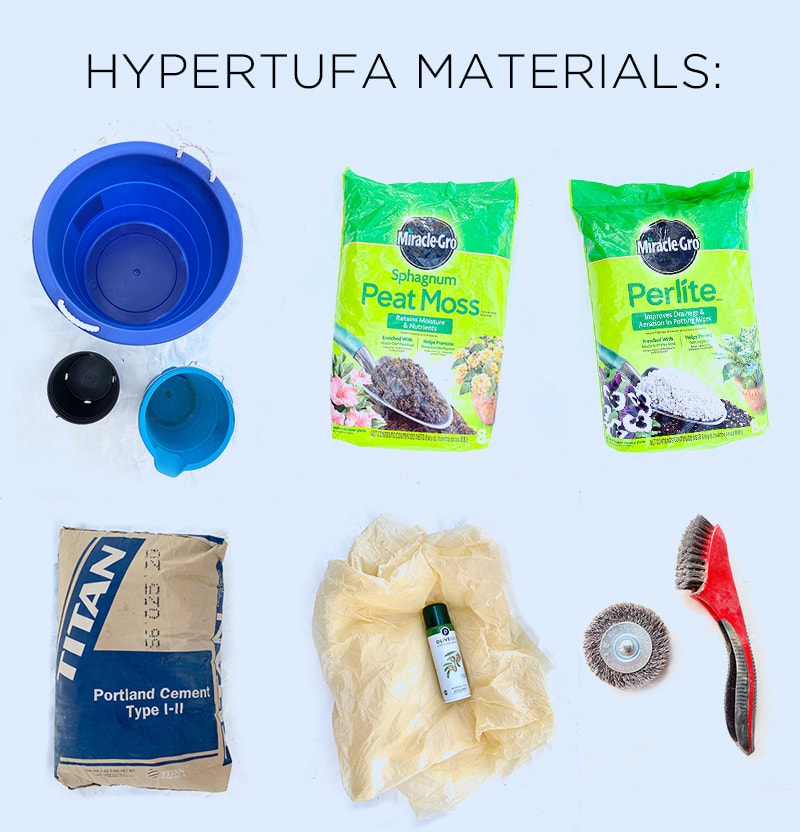
Hypertufa is a porous, cement based mixture that mimics the look of stone. It weighs much less than real stone/concrete, provides good ventilation for plant roots, patinas beautifully over time and can last for decades. I had never heard of such a thing before, have you? It was quite an exciting discovery, one with so much potential because it’s easily accessible for anyone to make. Hypertufa requires just a few inexpensive ingredients, very limited tools/materials, and no DIY experience. It’s pretty much fool proof! If you’ve never made one of these, you’re in for a real treat. Here’s what you’ll need:
How to make a hypertufa planter
- 1-2 bins or buckets: I used the largest bucket I could find for my outside mold, along with a smaller basket for my inside mold (the second smaller container is optional but I’d recommend it)
- Peat Moss
- Perlite or Vermiculite
- Portland Cement
- A large plastic bag or sheet + cooking or silicone spray
- A coarse wire brush (handheld or drill attachment)
- Safety gear: rubber gloves, mask and safety glasses
The recipe is approximately equal parts peat moss, perlite, cement and water—just mix, mold, and let it dry. It’s really that simple! From the dozens of tutorials I read and videos I watched, it’s not an exact science (some say to use 1/3 less cement) and you can even substitute sawdust for moss and vermiculate or sand for perlite. It’s one of those fun projects you can experiment with and personalize to make your own.
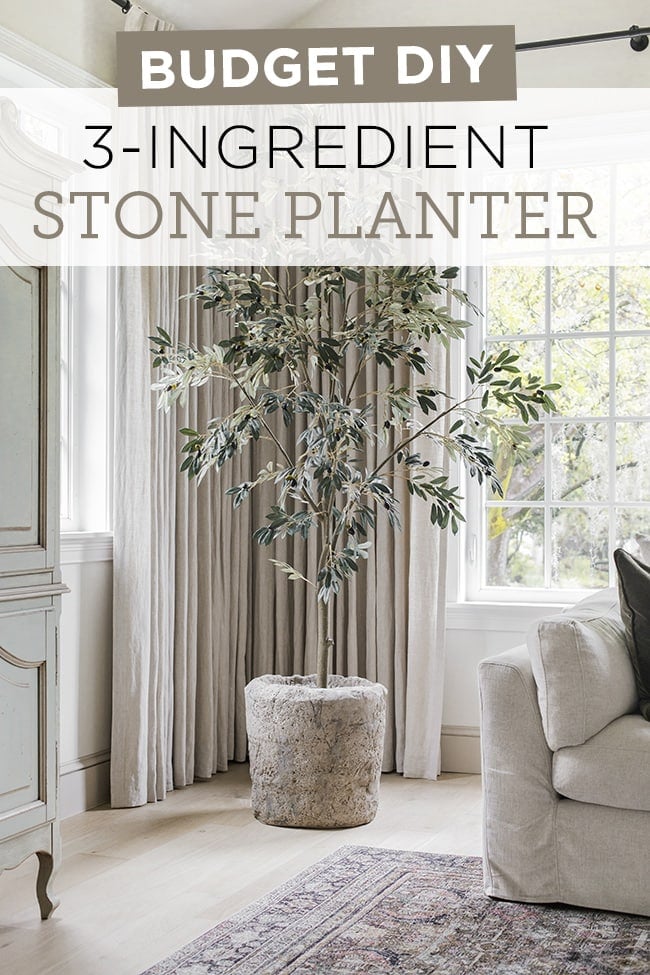
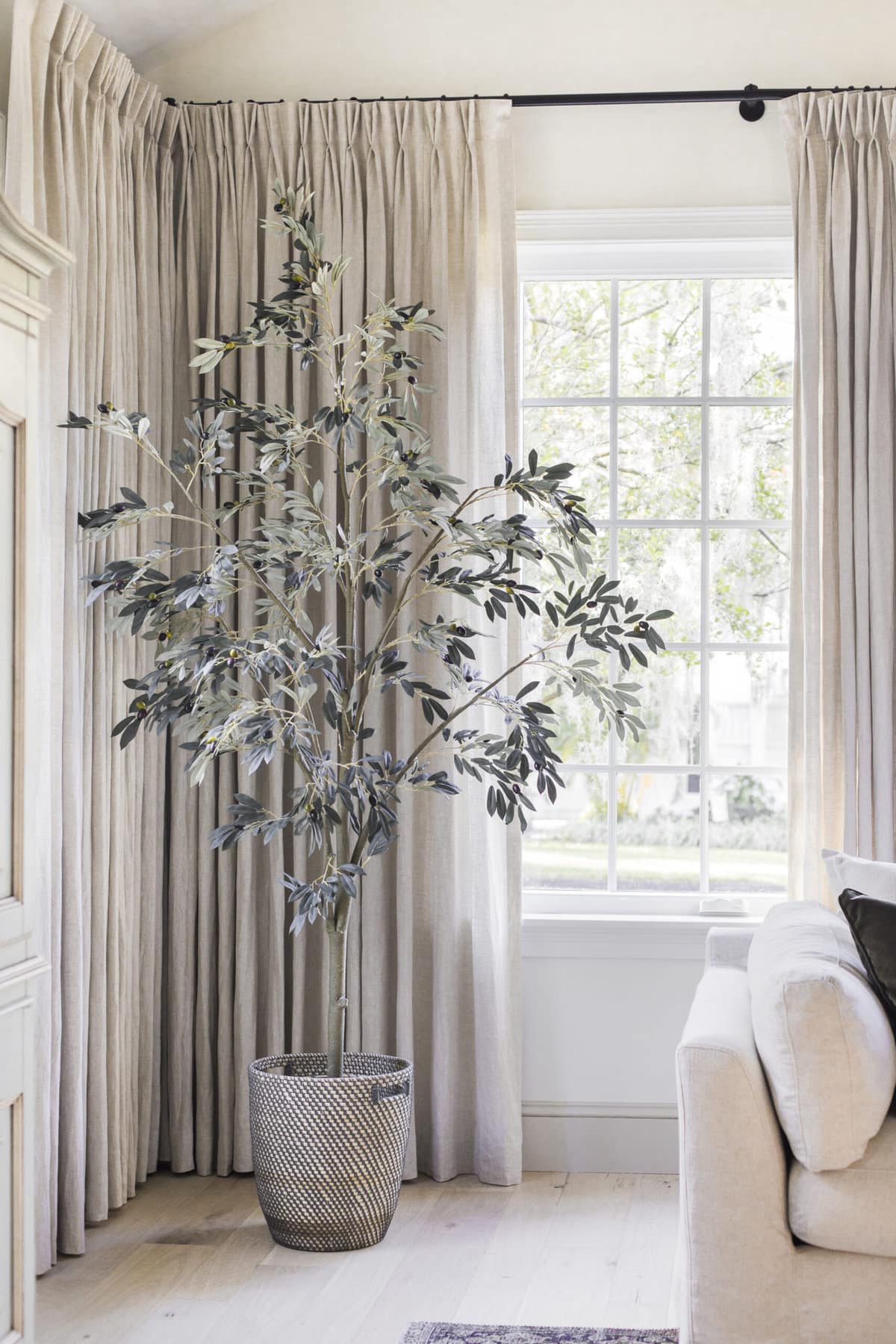
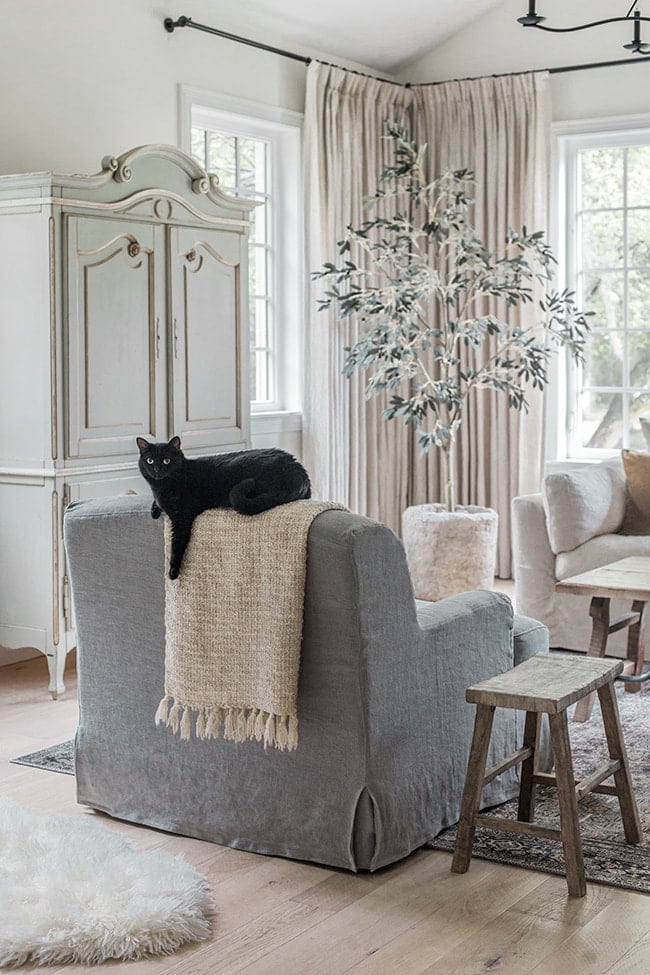
Hypertufa planters can work both indoors and out, and I already had the perfect spot in mind. The olive tree in the corner of our living room was in a basket that was a bit too small for the space, and I wasn’t loving the style with the design of our home. The room needed something more substantial, rustic and aged looking.
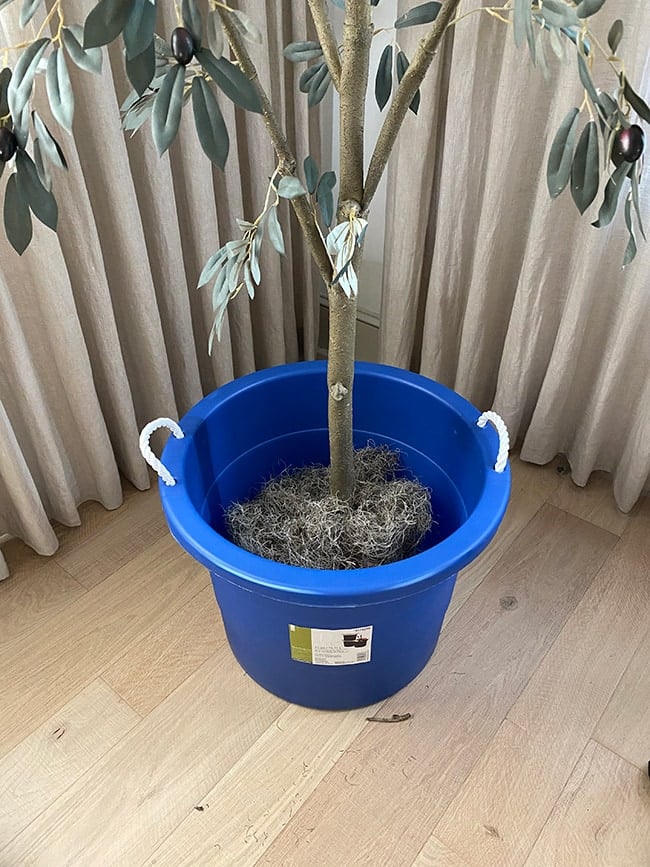
I looked everywhere online for the largest inexpensive container I could find to use as my mold, and ended up with this $8 bucket. I liked the slight tapered shape and the size seemed just about right:
Step 1: Prep your mold
You could pour the mix directly into your bucket, but that would give it a smooth, uniform surface and I wanted a rougher/uneven appearance. I looked around the garage for something to work with and found a sheet of plastic.
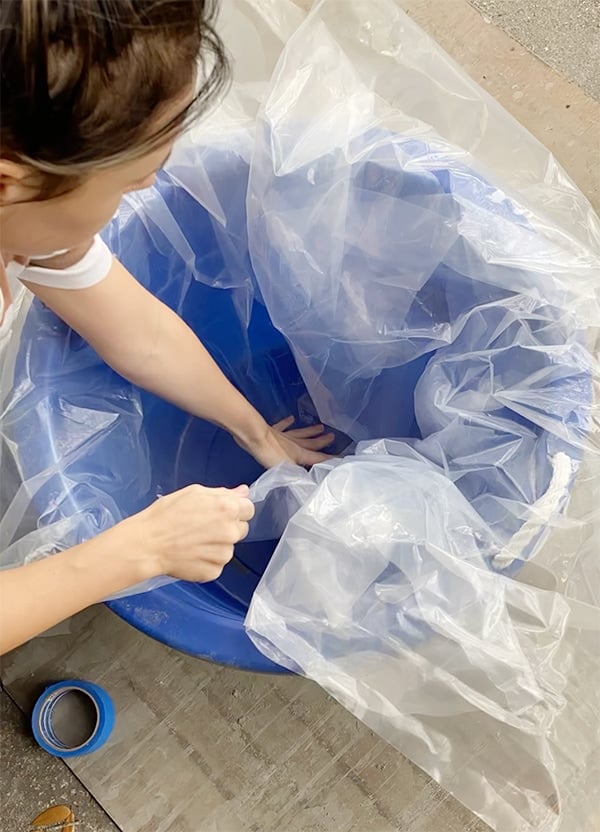
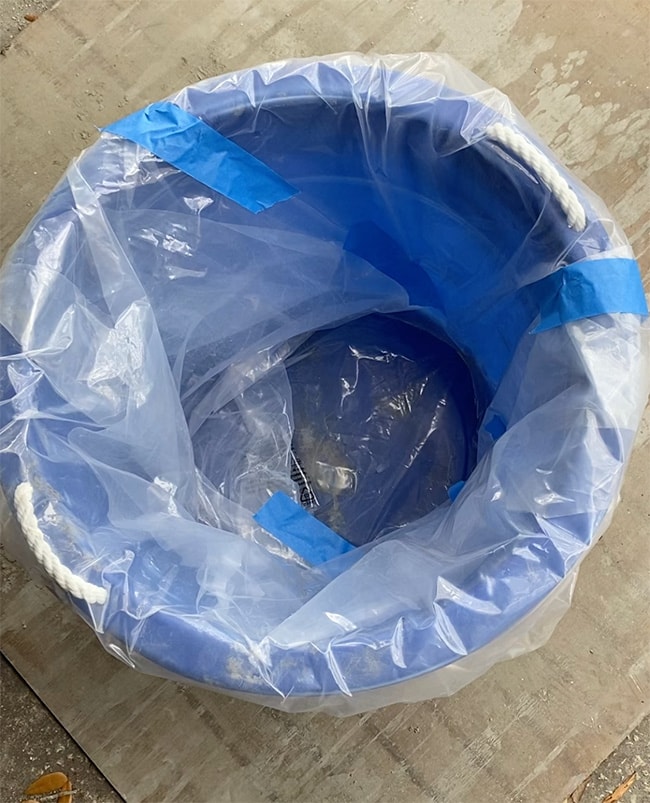
I lined the inside of my bucket, gathering more material in random areas to create an irregular shape and texture. Then I taped down any loose edges and along the top of the bucket.
Step 2: Mix the ingredients
Using a large bin/bucket (a wheelbarrow would be ideal for this size planter) add your dry ingredients: equal parts peat moss, perlite, cement (the order does not matter). Peat moss and Perlite come in 8 quart bags, so I added one bag at a time (and used a small bucket with measurement markings for the cement, but you could also eyeball it).
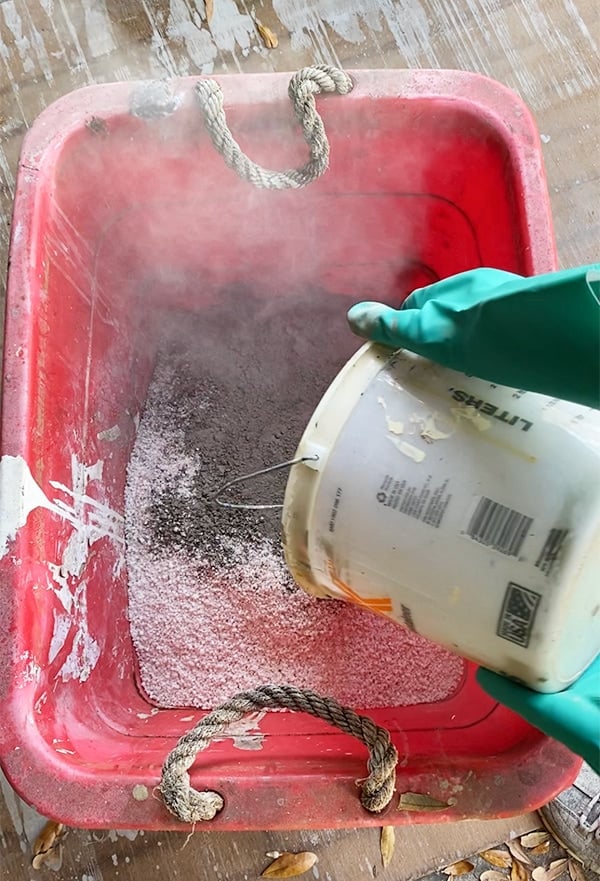
In total, I ended up using 24 quarts (three bags) of each, which was enough for my large 19″ planter plus a second smaller 8″ pot.
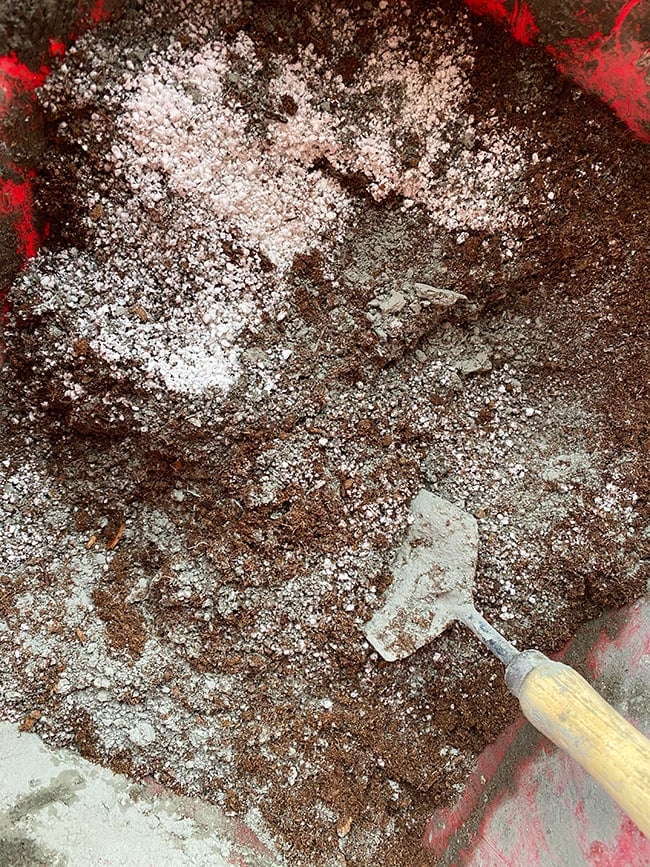
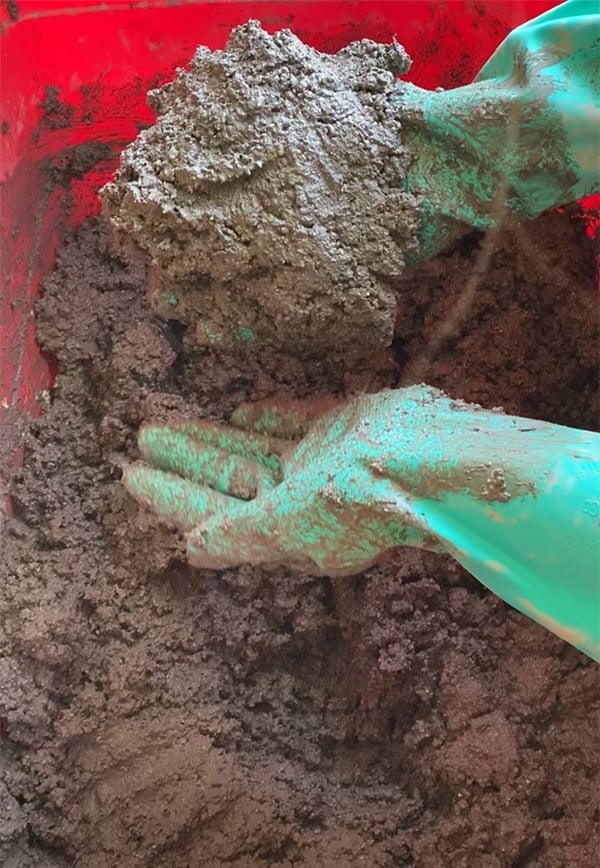
Once all the dry ingredients are mixed together, slowly begin to add water and mix well until you have a thick oatmeal consistency. It’s better to be too dry than too wet, because you can always add more water later. I shared videos and timelapses of the process from start to finish on Instagram, so make sure to watch before getting starting!
Step 3: Form the mold
First, spray down your bucket (or plastic liner) with cooking or silicone spray (some tutorials say this isn’t necessary but I say better safe than sorry!)
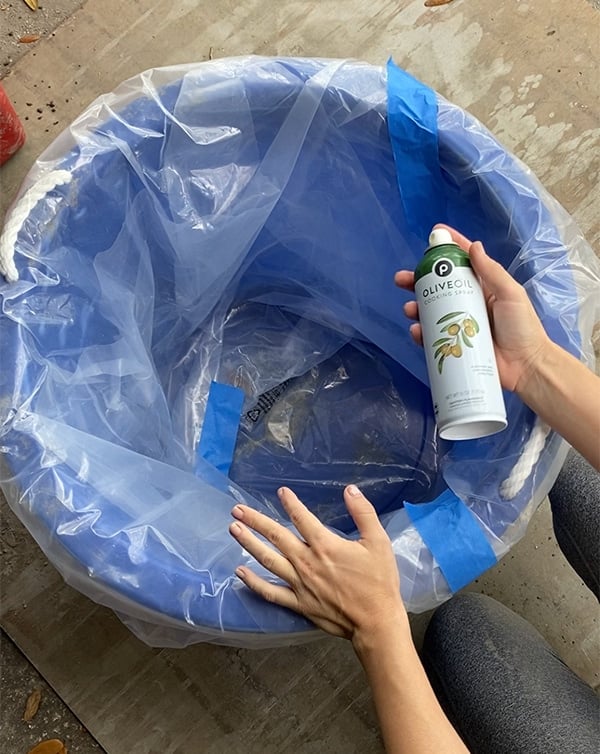
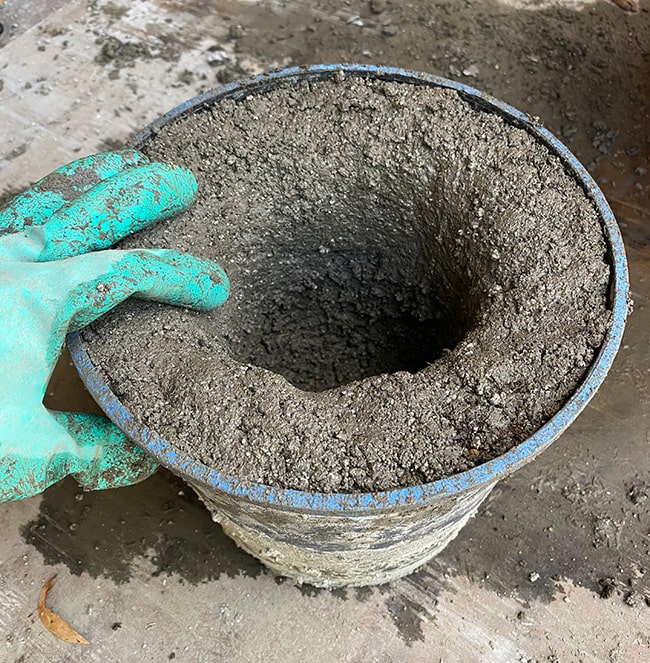
Start by forming a base approximately 3″ thick (the thickness will depend on the size of your planter, but you’ll want at least a few inches for a larger planter like this). Make sure to pack it down firmly as you go, compressing the mixture so it’s structurally solid. If you’ll be using live plants, you’ll want to add holes during this stage for drainage.
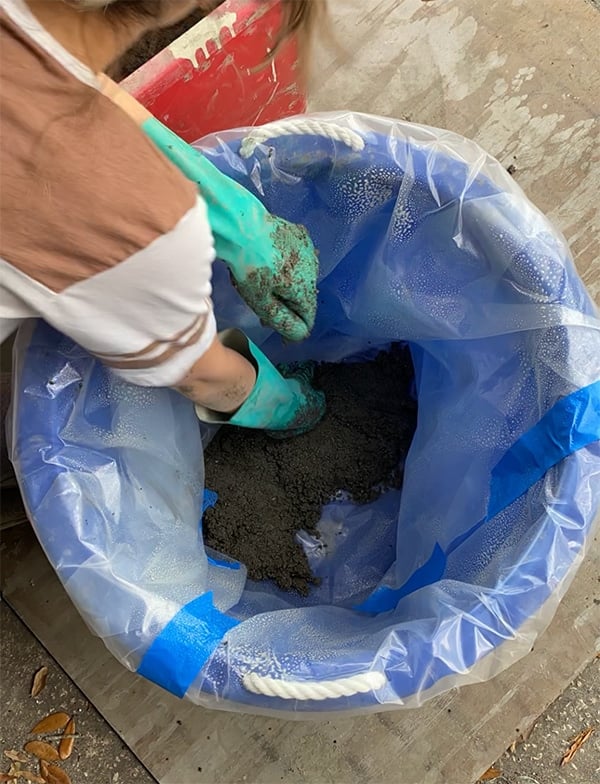
Next, you can begin to form the walls, pressing the mixture into the sides of the bucket. You’ll want the walls to be a couple inches thick for strength, but if they’re too thick then the planter can start to get heavy (especially one this size). Some people choose to shape the inside of the planters by hand, but I decided it would be easier to use a second mold. This would ensure the walls were a consistent thickness, and also keep the mixture from sliding around.
The only container I had that was the right size was the old planter basket. I figured I could put it in a trash bag coated in cooking spray to keep it from sticking to the concrete (more on that in a sec…)
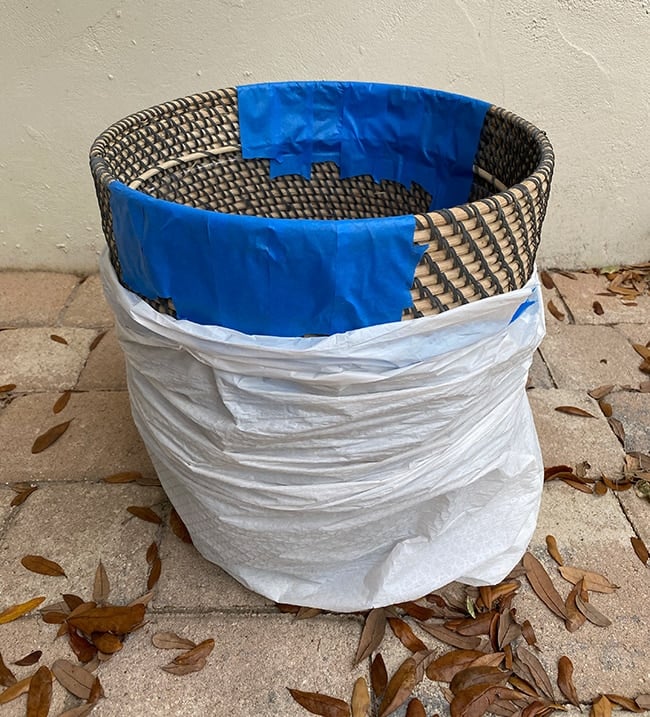
In it went, and I continued to work my way around the perimeter of the bucket, using a trowel to scoop the mixture and compacting it down with my hands.
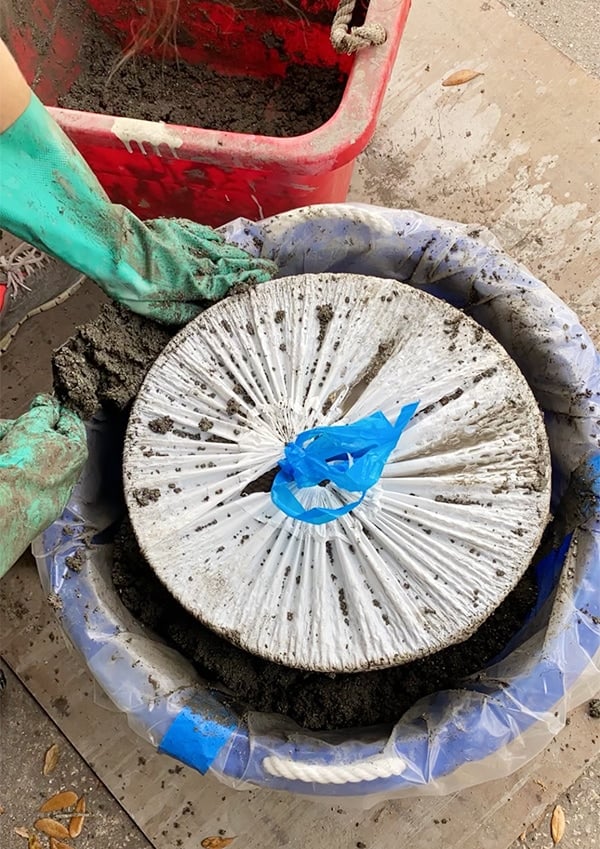
Once I reached the top, I rounded the edges to make them look more naturally worn and give the planter a little extra height.
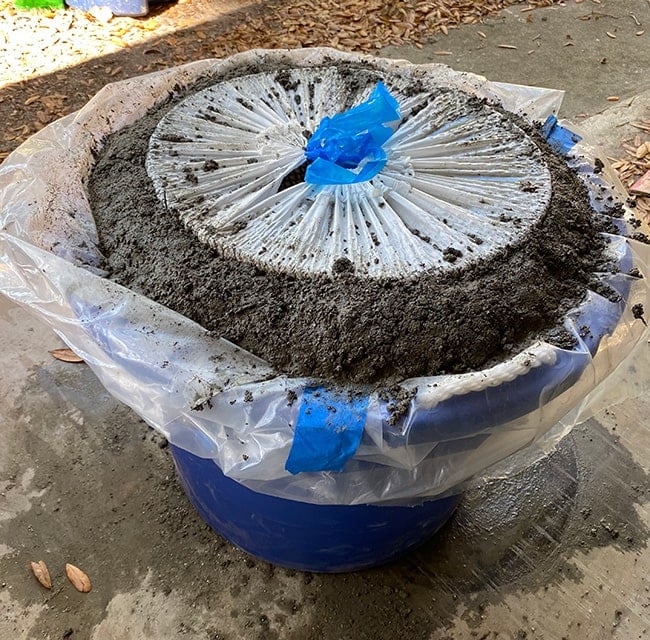
And you’re done! Cover it in plastic and walk away.
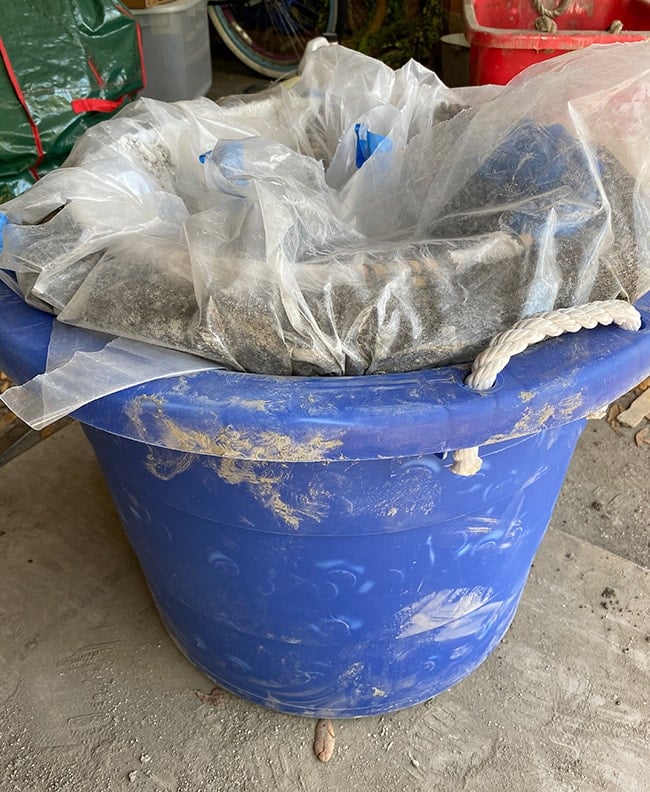
Step 4: Release the planter from the mold
After your planter has been sitting for 1-3 days (depending on the size/mixture ratio and weather), it’s time to check on it. It should be hard enough to come loose from your mold and stay intact, but soft enough to rough up the surface. Mine seemed ready after 1.5 days, but there was just one problem…
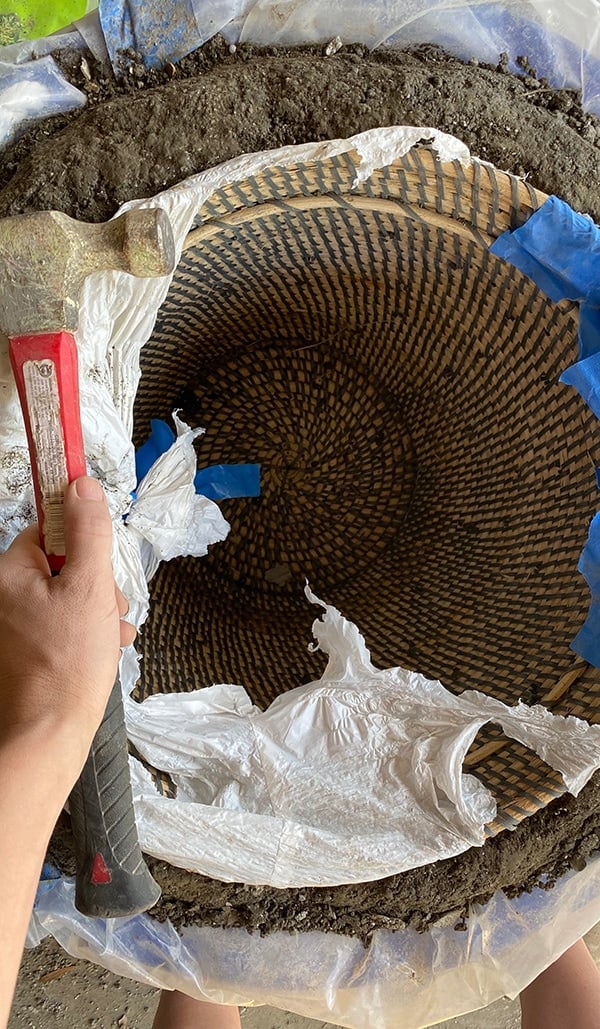
The dang basket would not budge. I tried wedging putty knives and screwdrivers around the edge and prying it out with a hammer to no avail. There was only one way out…
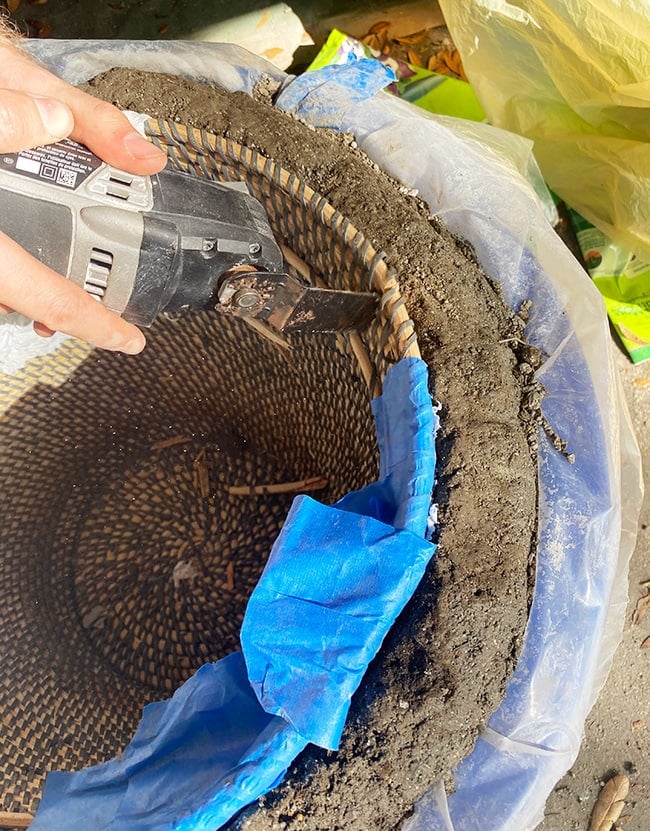
I was sweating bullets watching the dremel tear through the basket, worried it would damage the planter, but fortunately it all worked out (well, not for the basket, RIP).
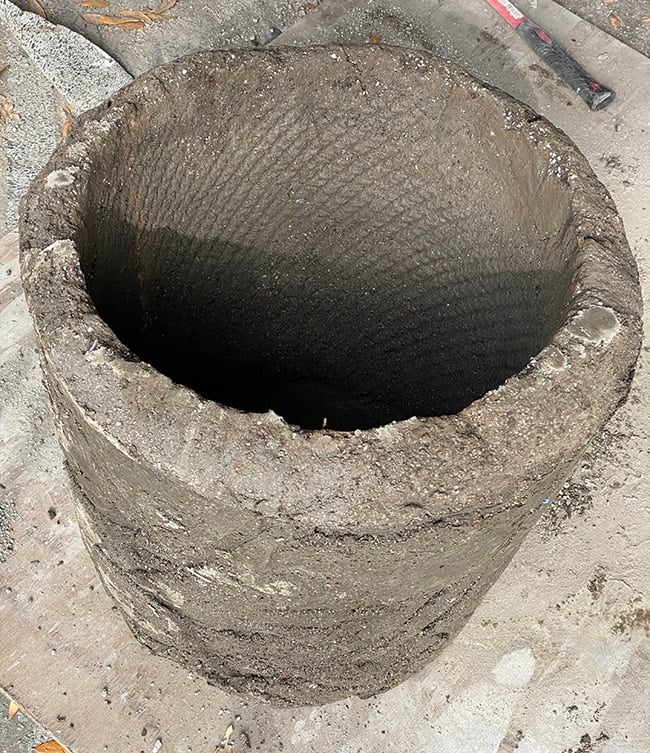
It even left us with a cool texture (although not worth the hassle—stick with smooth plastic!)
Step 5: Rough up the surface
Once the planter was free, it was time to work some magic. I grabbed my handheld coarse wire brush and began to scrape the top layer off.
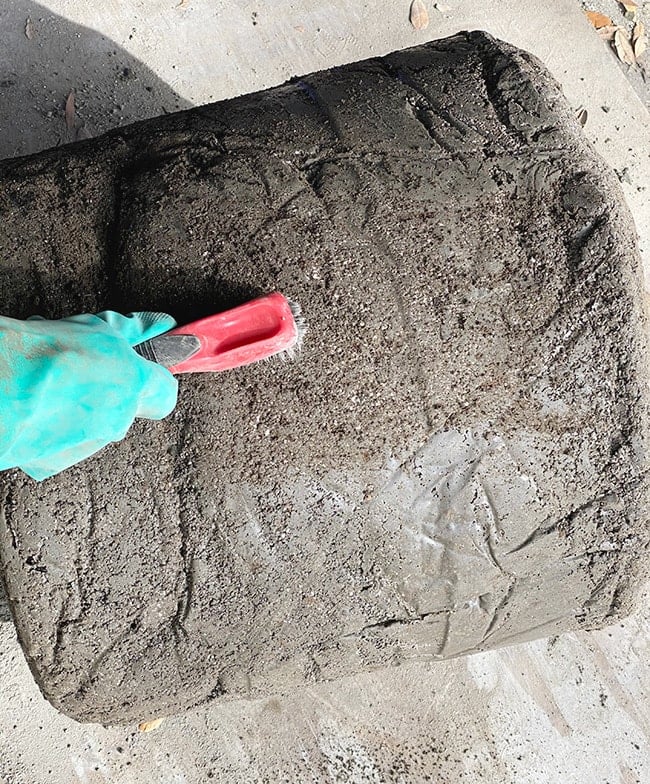
You can see where the texture is rough on one side and smooth/plasticky next to it. It comes off quite easily (the longer you wait, the harder it will be so I wouldn’t recommend waiting longer than two days). It would have taken a good 25-30 minutes to completely cover the surface, so instead I used my wire brush drill attachment (the same secret ingredient to my wood aging technique) to speed things up.
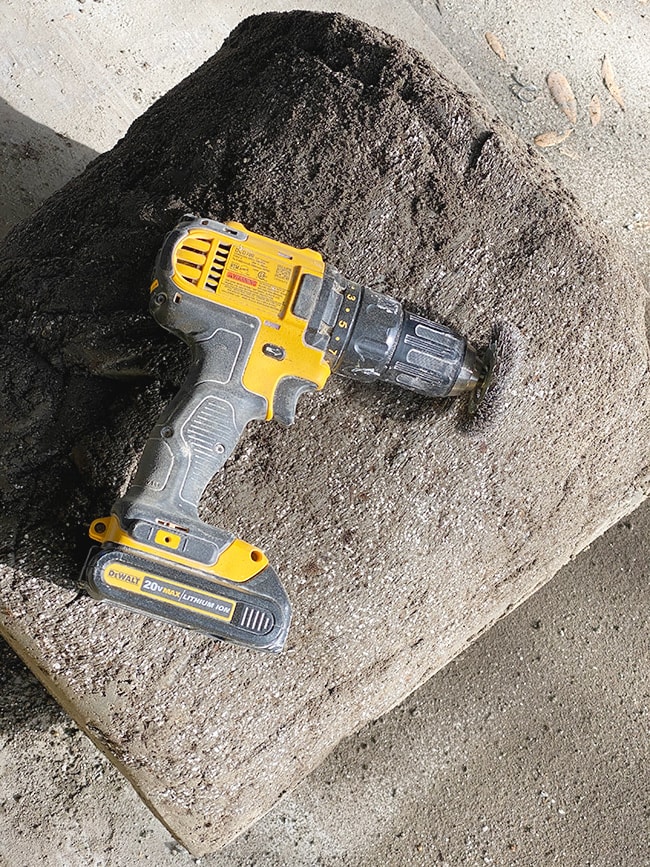
This cut the time in half (if not more) and saved me an arm workout (this little brush is the MVP of 2020!) I noticed there were some crevices formed by the plastic that were deeper than I wanted, so I used a bit of leftover concrete + some water and patched those up.
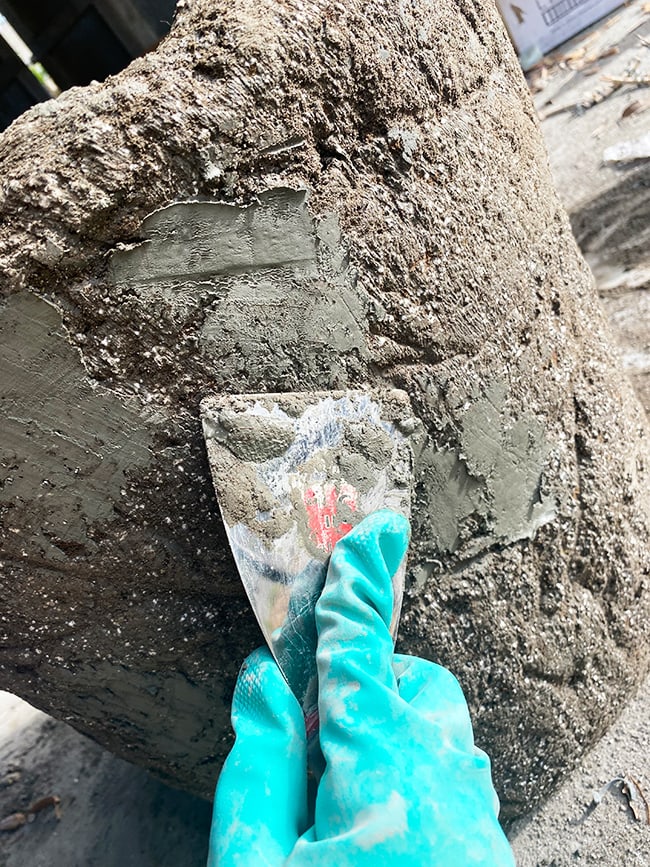
To make sure it didn’t look like a mistake, I filled in several more cracks/grooves all the way around the planter, which I thought would add variation and interest. I also took some of the dry mix debris from the wire brush and rubbed it into the wet concrete patch to make them blend in more. It’s all an experiment!
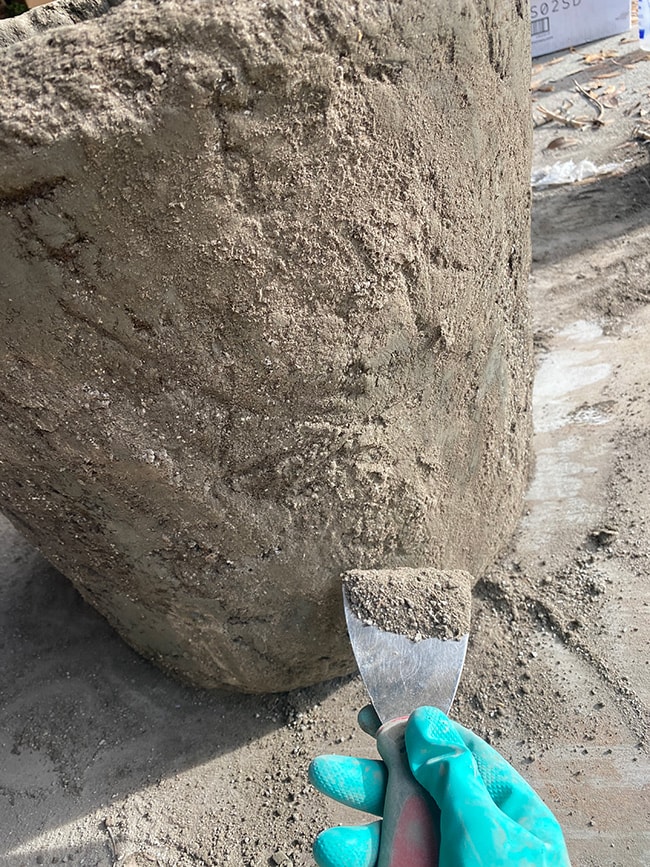
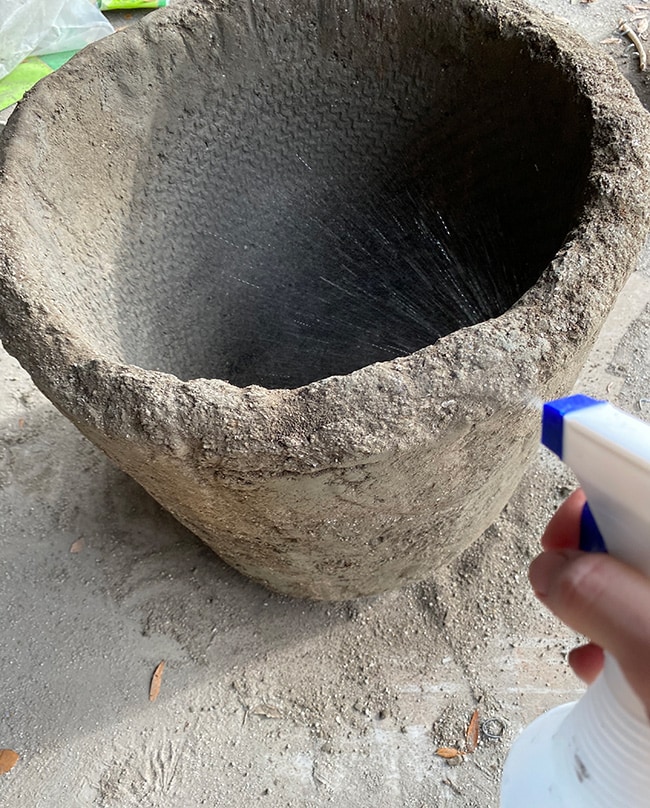
The planter was done, but now the waiting game begins. To prevent it from drying out too fast and cracking, it needs to stay covered and somewhat damp for several days—even several weeks, depending on who you ask. Once I was happy with the way it looked, I misted it down with water.
Then I covered it back up in plastic and didn’t touch it for another week. If you’re in a dry climate, you may want to periodically water it down.
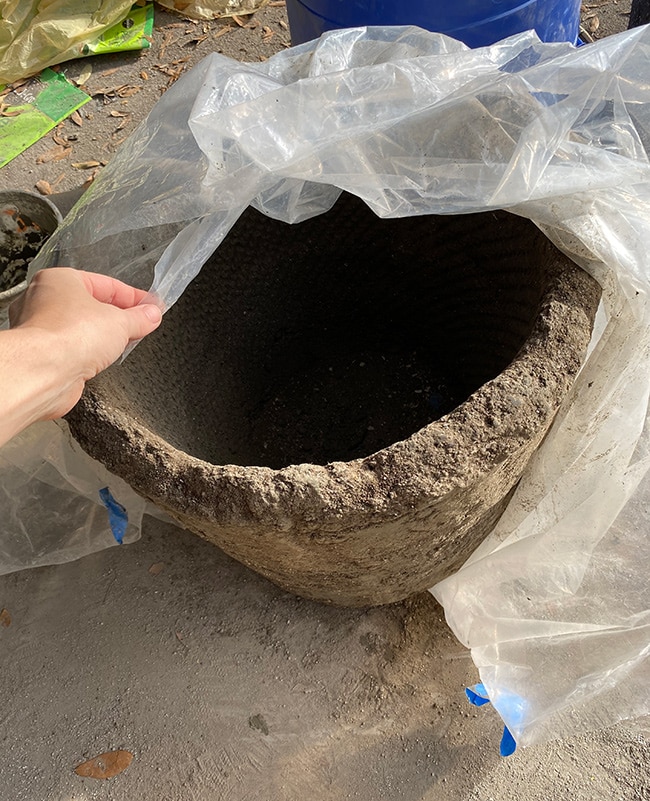
It sat in the garage for a few more weeks before bringing it inside (although it didn’t need longer than a week). Over time, the planter will become much lighter—both in color and weight—as the water evaporates. Here’s how it looks in its new home:
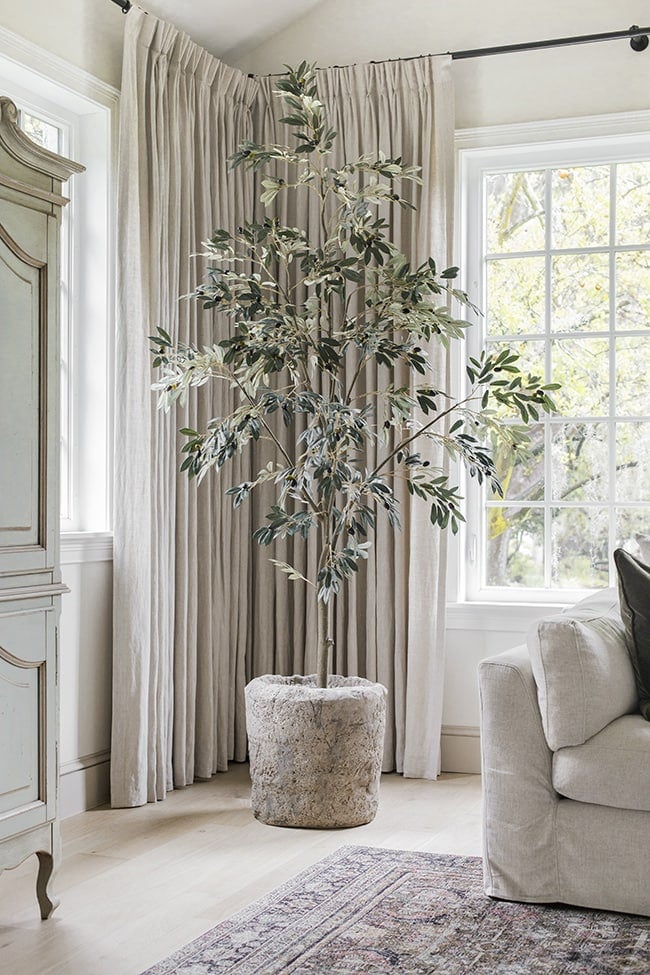
You’d never know it wasn’t 200 year old stone, right?
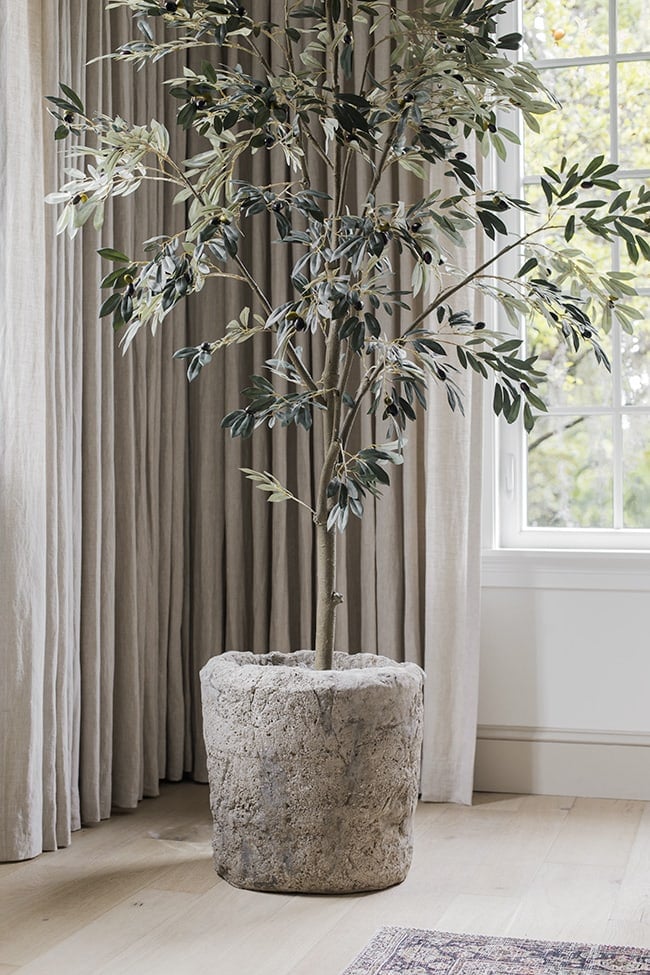
I placed bean bags on top of the tree to keep it in place and Spanish moss from our yard for a natural filler.
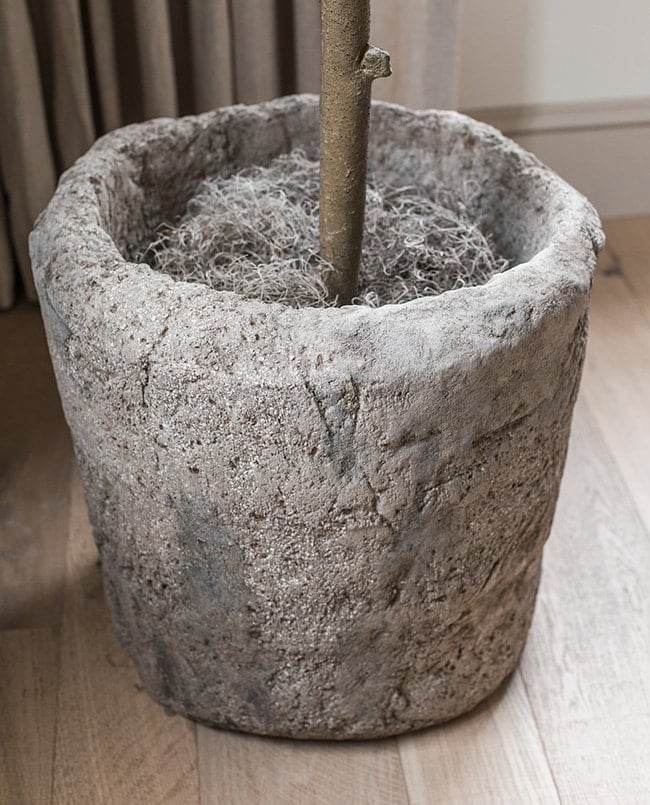
For around $40 in materials (plus $15 for the bucket and wire brush) you can’t beat it.

Here’s the smaller planter I made with the leftover mix. I didn’t use any plastic liner or pure cement patch, so you can see the difference it makes. I honestly love this simpler look just as much!
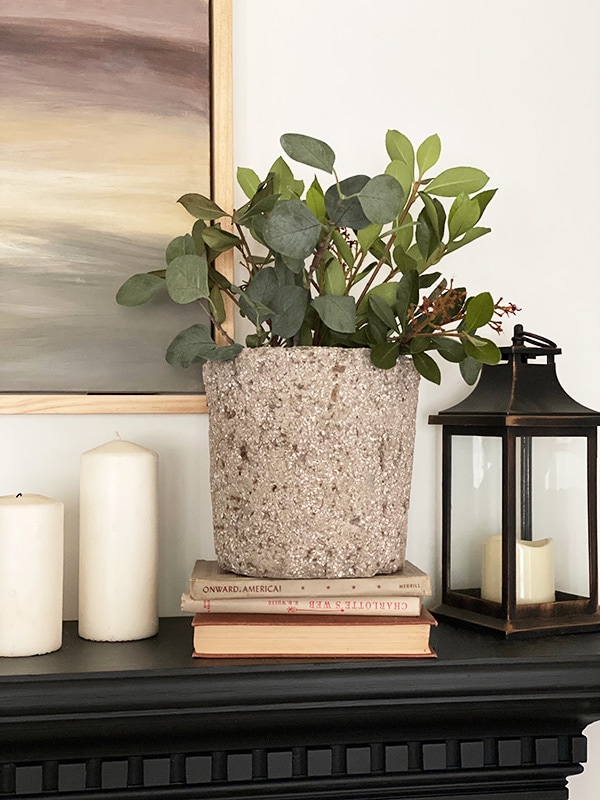
With this one I also formed the inside of the planter with my hands, instead of using a second mold.
Aren’t these so neat? I’d love to find a really interesting mold and try making one again using vermiculite to see how it changes the look. The options are endless when it comes to the shape of the mold and size of planter, too. It’s the perfect addition to our contemporary European style home, but I could see these used pretty much anywhere.

I know we’re all trying to minimize our exposure outside the home right now, so if you don’t have the materials on hand to make this, you can call and order them through your local Lowe’s for curbside pickup or have them delivered. This makes a great weekend project if you’re looking for a simple DIY idea to pass the time, or save this one for later (you can also browse my DIY project library which has over 100 tutorials).
And don’t forget to watch the process in action in my Instagram stories! Have a safe and happy week everyone.
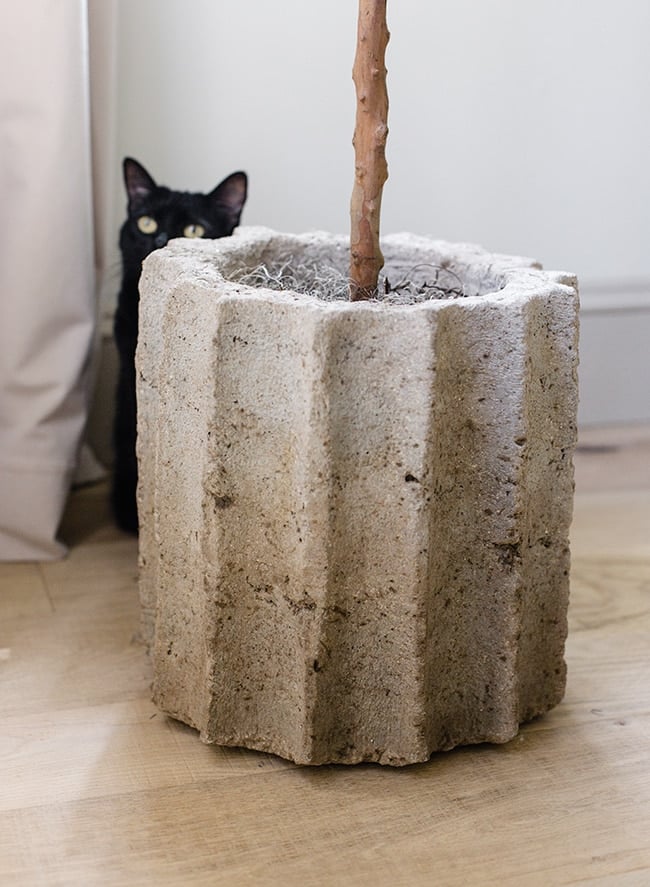
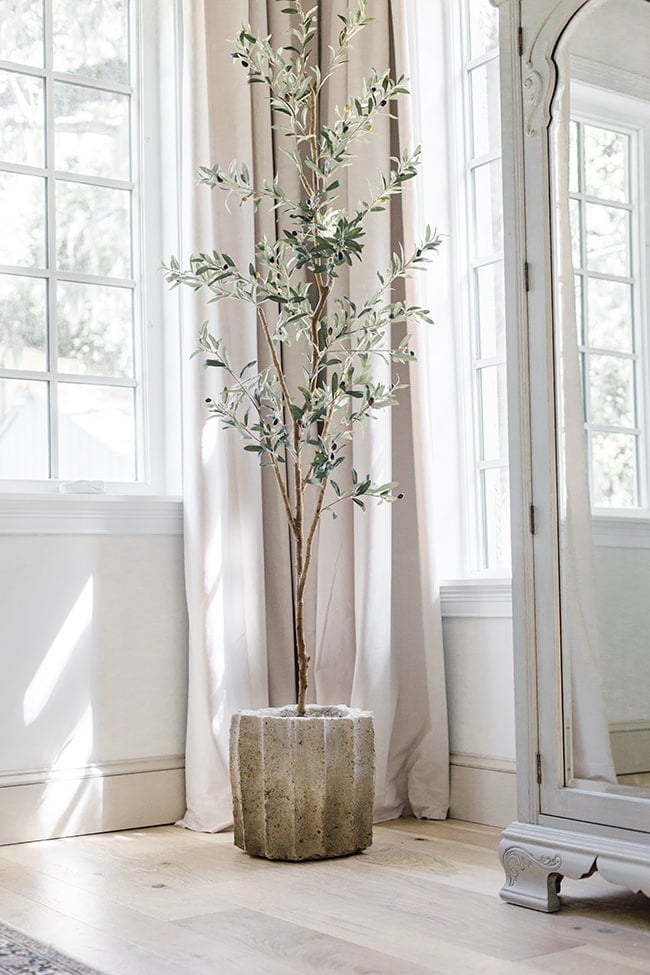
Update: I also made a fluted hypertufa planter using the same large bucket lined with foam pool noodles—here’s how it turned out!

DIY Hypertufa Stone Planter
Equipment
- Coarse wire brush
- Cooking spray
- Plastic liner
- Safety gloves and glasses
Materials
- 1 bag portland cement
- 3 8-qt bags peat moss (or sphagnum moss)
- 3 8-qt bags perlite (or vermiculite)
- large bucket
Instructions
- Prepare your mold (bucket) by lining it with a plastic sheet and cooking spray
- In a large container, mix together equal parts portland cement, peat moss, perlite and water (mix dry ingredients first)
- Press the mixture into the mold firmly, keeping a consistent thickness as you form the walls (at least 2"). You can use a second smaller mold inside, or build the sides up by hand
- Cover your mold in plastic and wait 24-48 hours for the mixture to harden
- Once the planter is dry enough to stay together, release it from the mold and use a coarse wire brush to rough up the surface
- Place the planter back under plastic, mist it with water to prevent cracking and let it cure for another 3-14 days, depending on your climate, planter size and mixture ratio
Notes






Janae says
Hi, I have been eyeing these “stone” look pots for YEARS!! So excited to try this! Just reading through the process and a little confused. You used 3 bags moss, 3 bags perlite. How much concrete did you use? (An entire 94lb bag??) planning on making your identical pot for our porch corner:) thanks for any help clarifying and the fabulous info as well! Have been reading your blog for years (right before you bought your 1st home in CA) and love all your fresh ideas/diy!
Jenna Sue says
Hi Janae! It’s equal parts peat moss, perlite, and cement. So I used 3 bags of the first two and then measured out approximately the same amount of cement. Hope this helps, enjoy the process!
Melissa Keplinger says
Love it! I made a bunch of hypertufa planters a few years ago & they are still going strong. Just a suggestion, if your planter has a live plant in it, the planter will absorb water as you water the plant and eventually will stain and warp your floor as I learned the hard way. ?
Jenna Sue says
Ah that’s good to know, Melissa! We’ll definitely keep the faux tree in there 🙂
Sue says
I love the idea and will probably try it this Summer. Just one thought was: Aren’t you worried about the moisture in the pot ruining your hardwood floors? Seems like it would take forever and a day for the pot to completely dry out, if ever, and then if you have a live plant in it you would need to water that. I know with the regular clay pots they hold the water in the clay itself so always a chance of water marks on the surface it is sitting on.
Jenna Sue says
From what I’ve read, the pots dry out completely after a few weeks and we waited over a month before bringing ours inside so I think it will be fine! I have checked underneath it and there’s no sign of moisture.
Barbara says
Oh, I love your planter, Jenna Sue! It is the perfect container for your olive tree! I love how you figure out out how to get the look you want for way less – and it always looks great!!
My only experience with hypertufa was making pumpkins last fall as gifts. I used those plastic pumpkin trick or treat pails as molds and stuck about a 1 inch diameter stick in the top as a “stem”. (My only hint is that you need to pack the hypertufa in tight so you can pick up the impression of the face and lines of the pumpkin. ) They really turned out cute and my friends seemed to like these earthy looking pumpkin.
With my leftover hypertufa I put maybe 4-5 inches of mixture in children’s sand buckets, inserted a small plastic container to create an hollowed out space and left the top edges rough. When I unmolded it, I had some great very natural-looking candleholders that I now use on our table outside. (Garage sales are the perfect place to find inexpensive containers for hypertufa making!)
I’m so glad you introduced people to this fun and creative way to make natural looking decor! I can’t wait to see what you do next!! And thanks for all your hard work.
Jenna Sue says
Oh I love that pumpkin idea, how fun! There’s so many possibilities with this stuff. I can’t believe it took me this long to discover it!
Claudia says
I love it ????
Erin says
This is just amazing! Thank you for sharing another great tutorial! I don’t have access to the Titan Portland Cement– is there a certain type of Quikrete you would recommend? There are so many different types.
Jenna Sue says
Thanks Erin! It has to be portland cement, it can’t be regular concrete. There must be a home improvement store/garden center in your area that would carry it!
carolyn says
I love it! What would you suggest using in place of the basket, any ideas?
Jenna Sue says
I would try to find a smooth/plastic container in a similar size, or perhaps fashion my own mold with cardboard — if not, then try to just form the walls without any mold in the center!
Carolyn says
Thanks
Teri says
Per usual: genius. Thanks for sharing this and making it seem like something I could do!
ps. you forgot the cost of the basket…;)
Jenna Sue says
Thanks Teri! I’ve had that basket for longer than I can remember so it doesn’t count 😉
Janae says
Hi, I have been eyeing these “stone” look pots for YEARS!! So excited to try this! Just reading through the process and a little confused. You used 3 bags moss, 3 bags perlite. How much concrete did you use? (An entire 94lb bag??) planning on making your identical pot for our porch corner:) thanks for any help clarifying and the fabulous info as well! Have been reading your blog for years (right before you bought your 1st home in CA) and love all your fresh ideas/diy!
Lisa says
Fantastic!!!! Sorry if I missed it, but the tree is gorgeous too. Where did you get that?
Jenna Sue says
Thanks Lisa! You can find everything linked on my house sources page: https://www.jennasuedesign.com/shop/heights-house/living-room
Karen says
You’re the man! Er woman . Love it.
Jenna Sue says
<3
Jessi says
Wow! That is so perfect! I’ve been in love with those giant stone planters but the prices, yikes! I never thought there would be an achievable DIY that looked so great…leave it to you! All the heart eyes ?! Thank you!!
Jenna Sue says
I just knew there had to be a way! I’m thrilled it’s pretty easy and cheap for us to do 😉
Kim says
This is just beautiful. Have been wanting to try a small hypertufa project in preparation for a much larger project: a trough style pond. The plan is to build a cinder block enclosure around a pond liner and apply the hypertufa mixture on the cinderblocks like stucco. Thank you also for all the additional tips, i.e. wire brush Also wanted to say how happy I am to have rediscovered your blog. For some reason, the email notifications had stopped. Really missed your posts and am delighted to be receiving them again.
Jenna Sue says
Thanks Kim, sounds like the hypertufa would be perfect for that project! I’d love to see how it turns out 🙂
Jodi says
Your are incredible! I’ve been looking for two large aged stone planters for my new landscape. Guess what I’m gonna do! I thought for sure this was going to require blending paint colors to get the finished look. No painting, I can do this. I really wished we were neighbors.
Well done!
Jenna Sue says
Yayyy! Glad I could help. These planters will be perfect! Let me know how they turn out.
Sandra Hinds says
You are amazing! I absolutely love this planter! I love all your DIY projects – they always look so expensive and stylish — so many other DIYs look cheap or cheezy. Love your blog
Sandy
Jenna Sue says
That means so much Sandra, thank you! I hope you get a chance to give this project a try!
Brenda T Grover says
These are beautiful. I made similar ones years ago but it was a more complicated process using chicken wire to stabilize the sides and bottom. So I will try it again. I made planters using cardboard boxes, and they lasted for years . You have great diy’s I just dug out an old canvas painting and gessoed it.
Thanks for all the inspiration
Brenda
Jenna Sue says
Ooh, how did the cardboard planters turn out? Seems like that could leave an interesting texture. I’m glad there’s an easier way for you now — definitely give it another shot and let me know how it goes!
Wendy says
Where can I find the “gessoed canvas” project. I searched using that terminology. It sounds interesting and I have old canvases I’d like to redo.
Jenna Sue says
Hi Wendy, it’s right here! https://www.jennasuedesign.com/2020/04/how-to-beginner-landscape-acrylic-painting/