
Wondering if a spa + pool hybrid (spool) is right for you? I’m breaking down everything we’ve learned after installing ours more than a year ago. In this post you’ll learn exactly what it is, why we chose it, and how it compares to other types of pools. Let’s dive in!

The backyard was the first space we started working on when we bought the Spanish Sanctuary in 2024. After a long and challenging backyard renovation at the Hacienda Hideaway, we didn’t want to waste any time on this house.
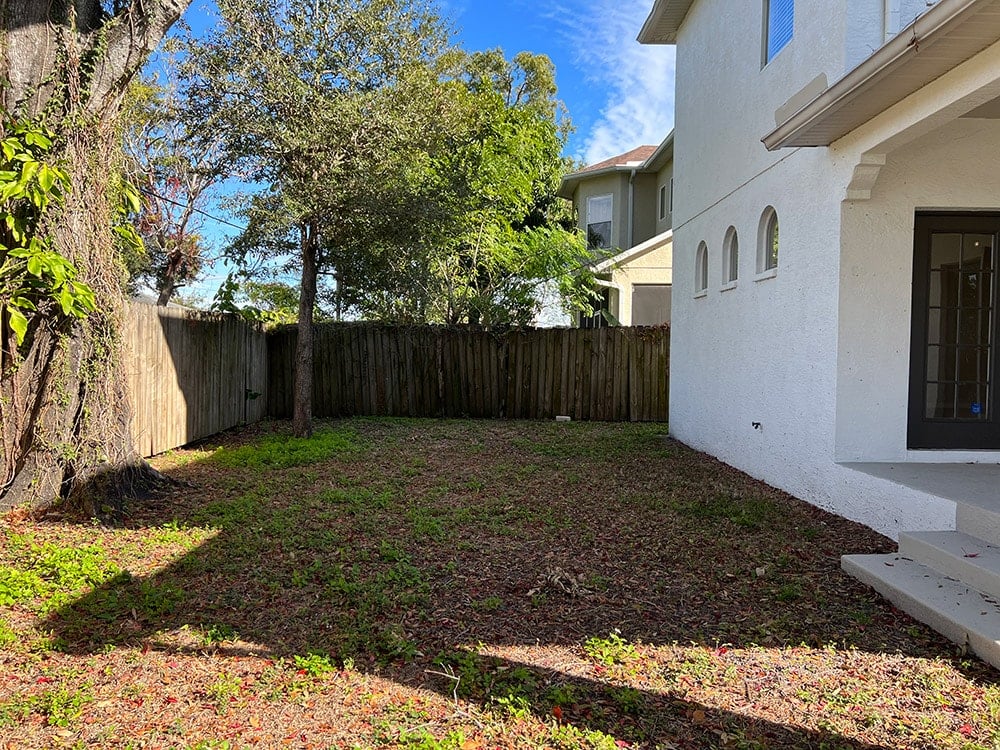
The space began as a blank canvas, with a modest footprint of 26’x44′:
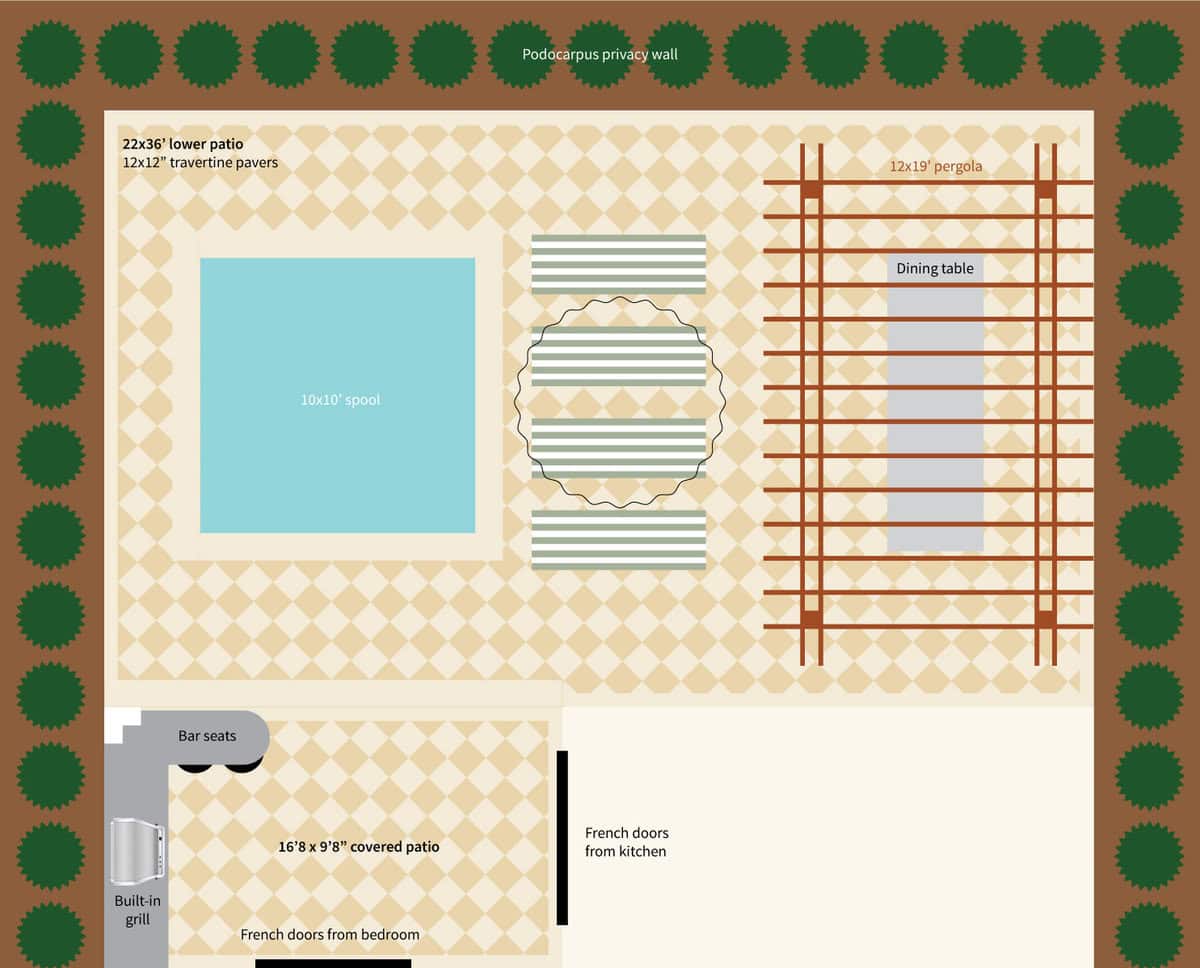
We came up with a Mediterranean-inspired design plan and hired a local pool contractor recommended by a friend.
Why choose a spool?
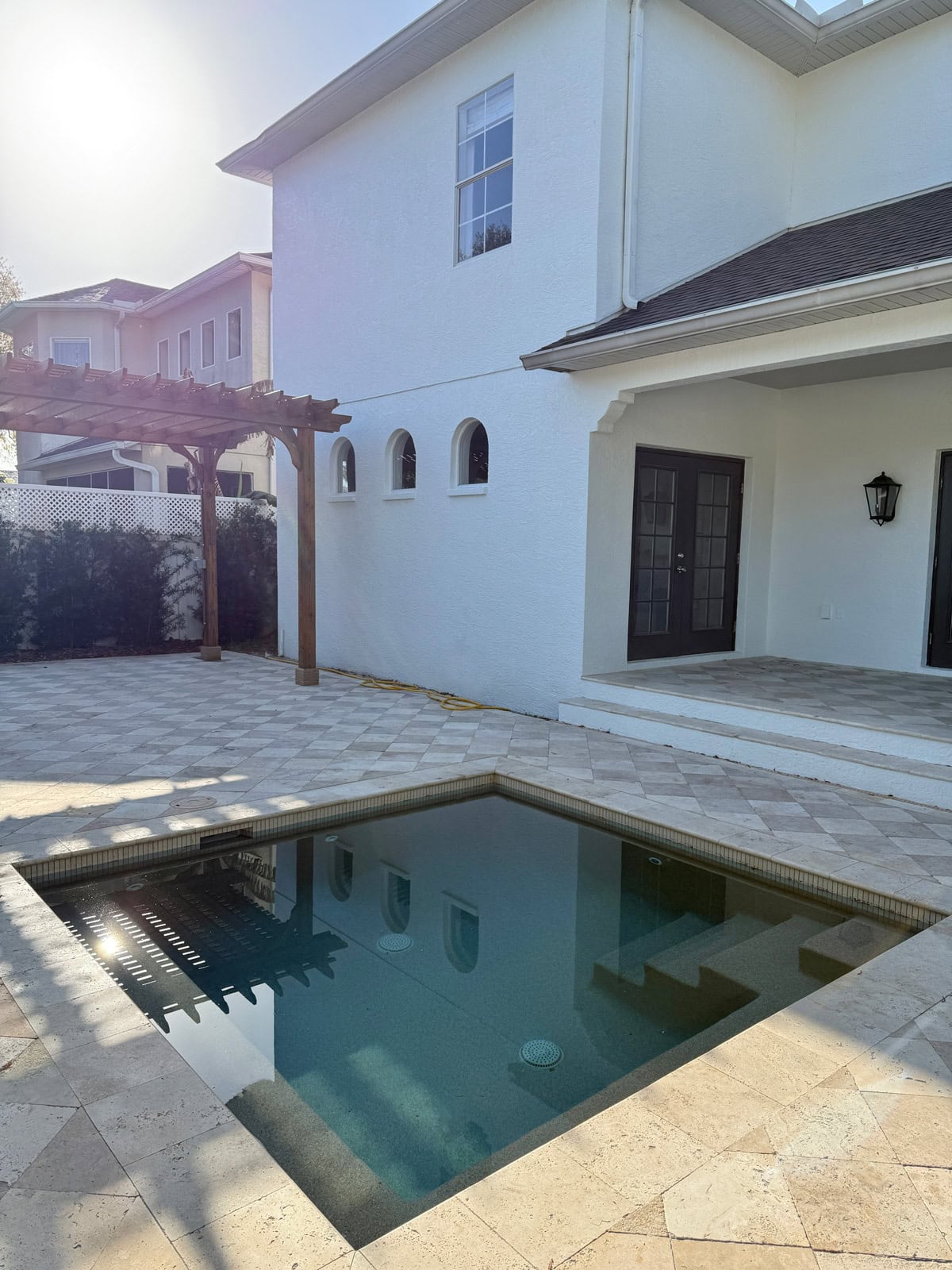
The main feature of this yard is the 10×10′ concrete plunge spool (spa/pool). We decided to go this route for a few reasons:
- Heated pools and spas are highly requested by guests, even in Florida. A spool is the best of both worlds and can be used year round.
- We wanted a specific size and configuration to fit our yard, and couldn’t find the right fiberglass model.
- Our last fiberglass pool install took two years to complete, but concrete can take as little as a month.
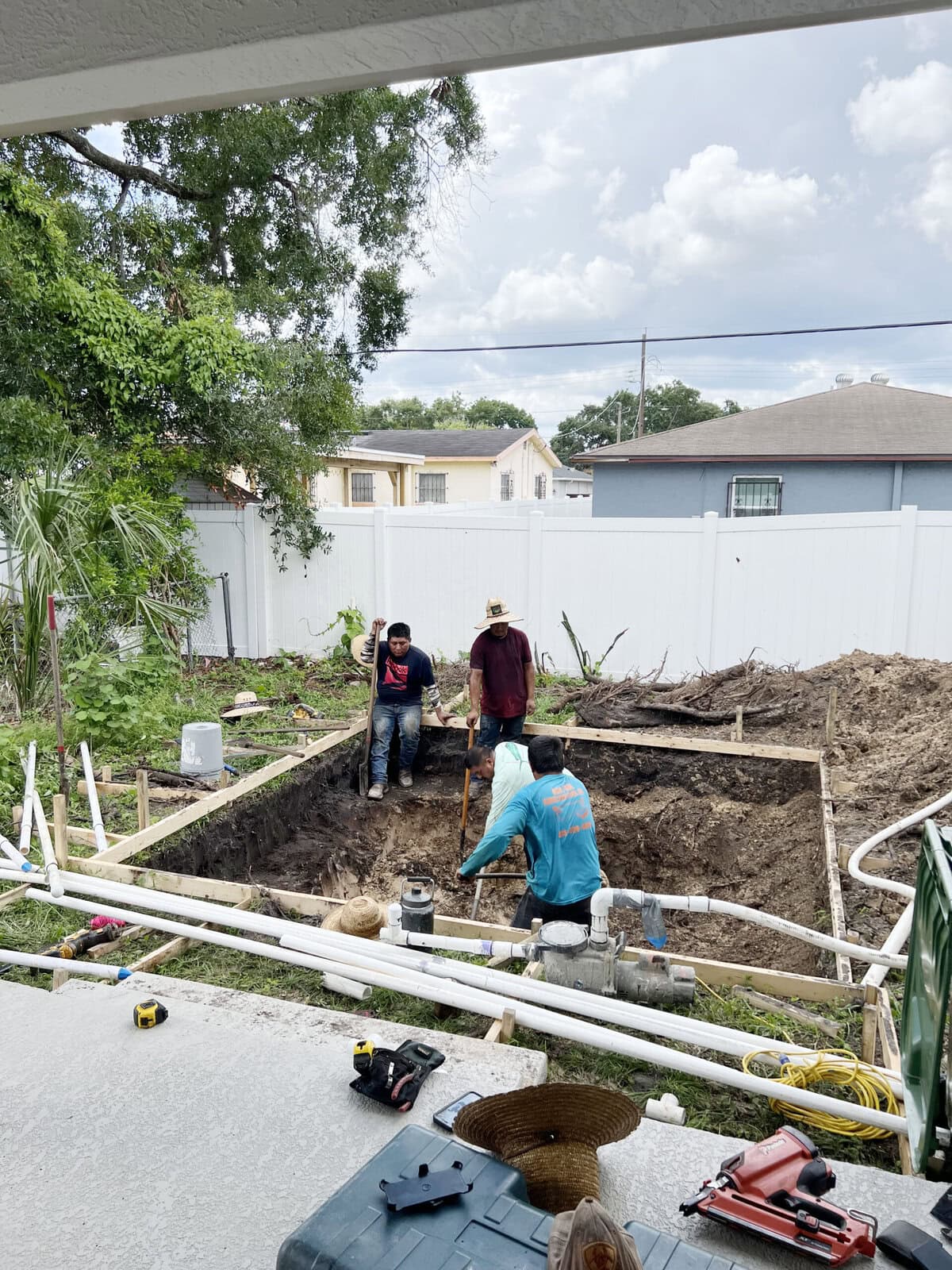
We broke ground on the spool in the spring of 2024. Permitting took longer than expected, but progress was steady and we were excited to watch it all come together.
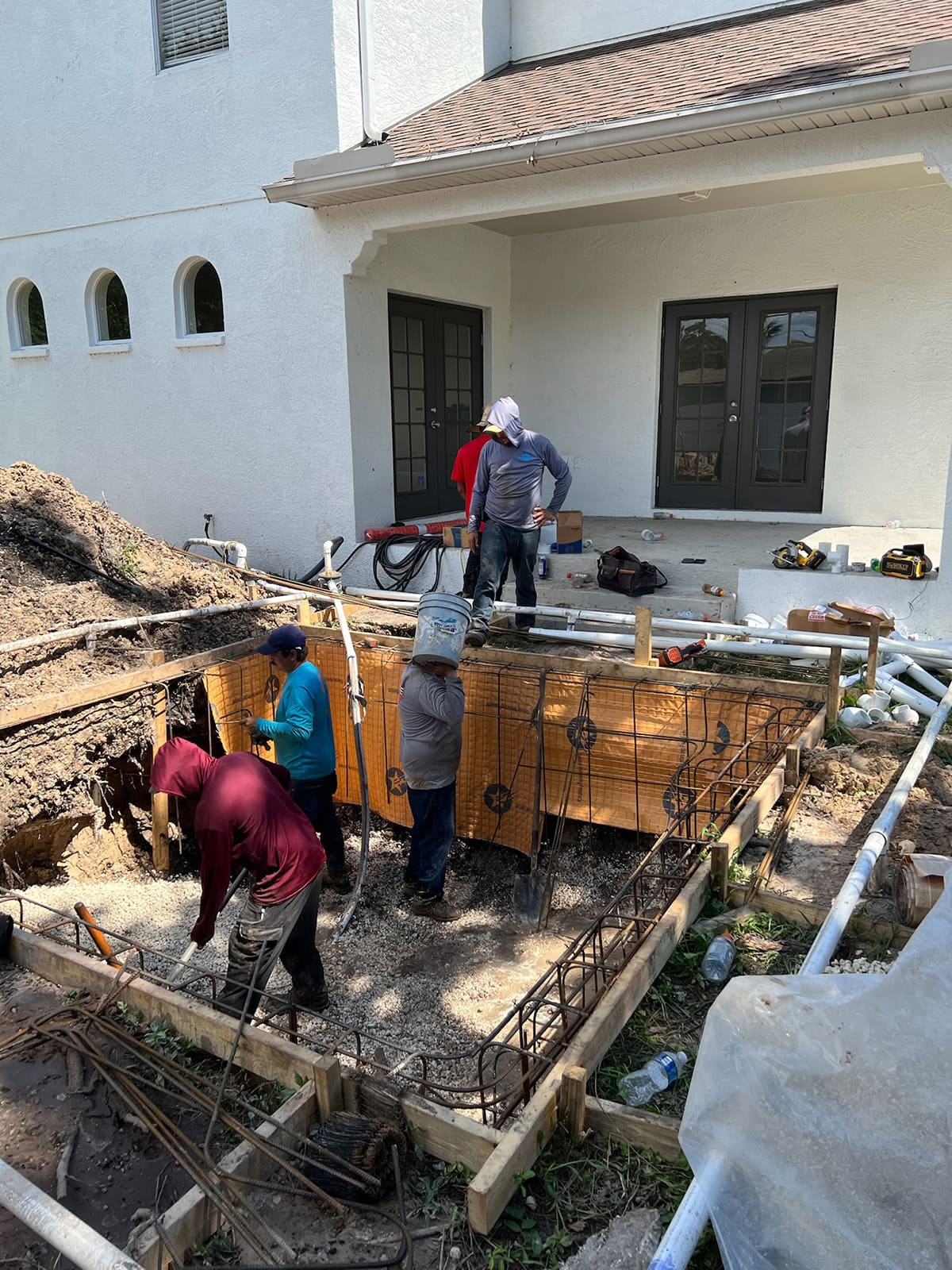
Rather than traditional poured concrete, our installer used shotcrete—similar to gunite, except it’s premixed with water before spraying it on. It can be a quicker process than gunite, as it has to be completed all in one session.
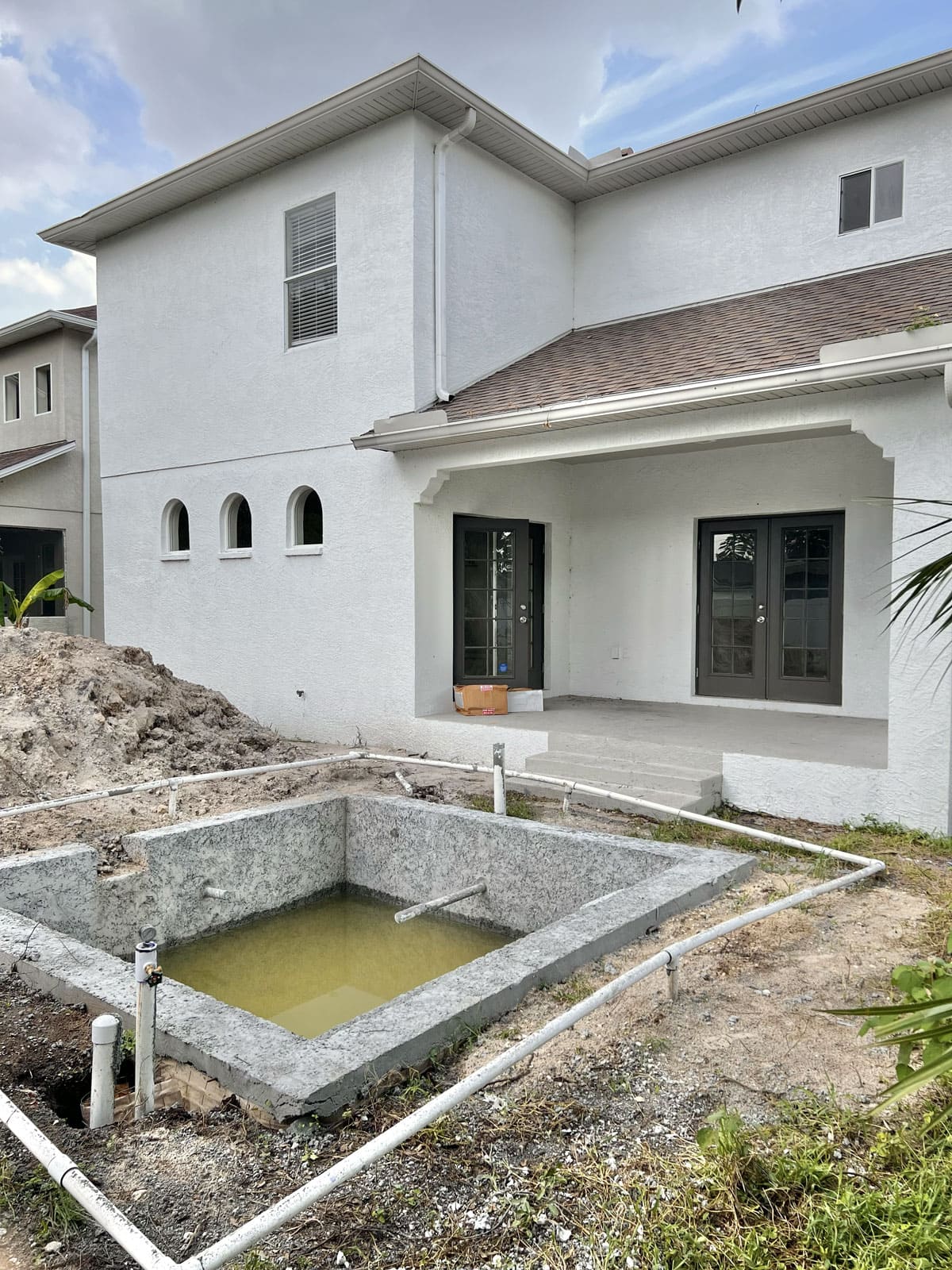
Another benefit of concrete is the ability to completely customize the shape and configuration. Since the pool will also be used as a spa, we decided on a 4′ depth with benches for seating along two sides.

After the shell was formed, the top ledge was prepped for tile. I eventually settled on 12×12″ tumbled travertine pavers in two contrasting colors to create a checkerboard pattern on the patio. It was a big risk, because I couldn’t find many real-life photos of the pavers installed, and could only go by the product photos online:
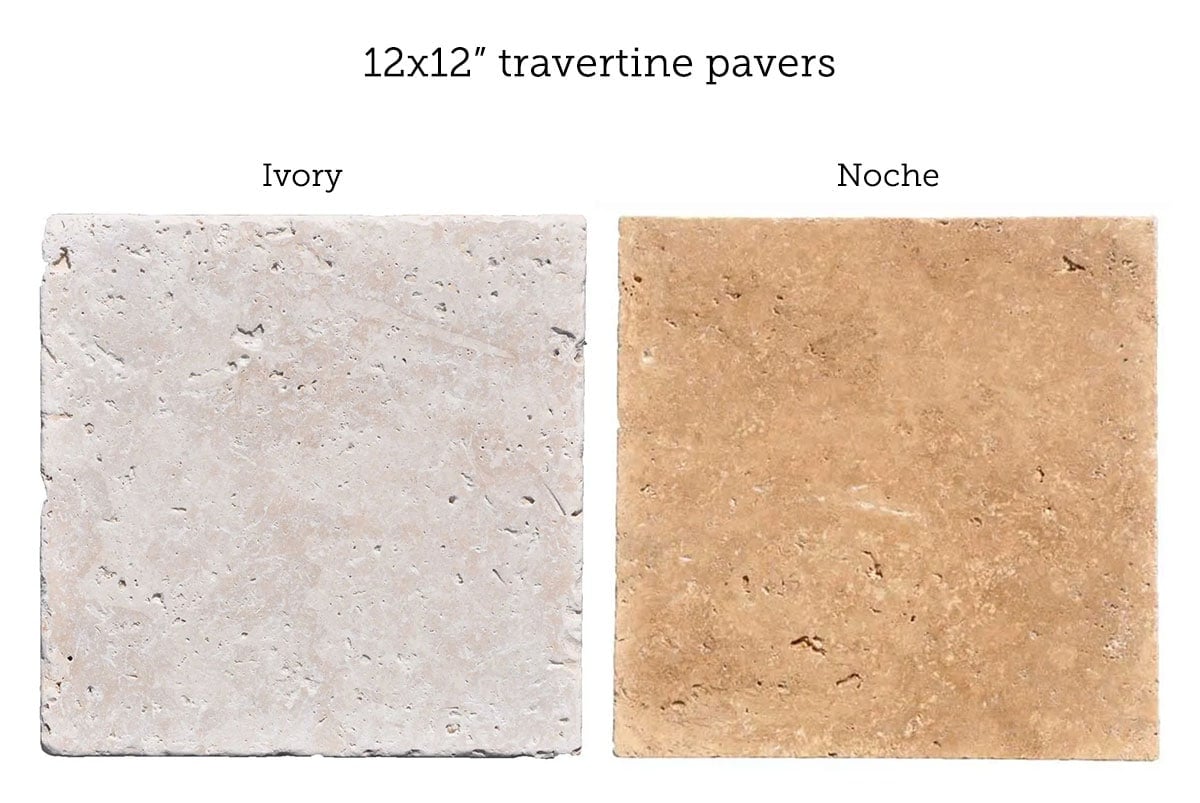
Unfortunately, there was much less contrast in person and they were a non-returnable special order from overseas. We ended up staining and sealing hundreds of pavers by hand over the course of several weeks before install (more on that in a sec).

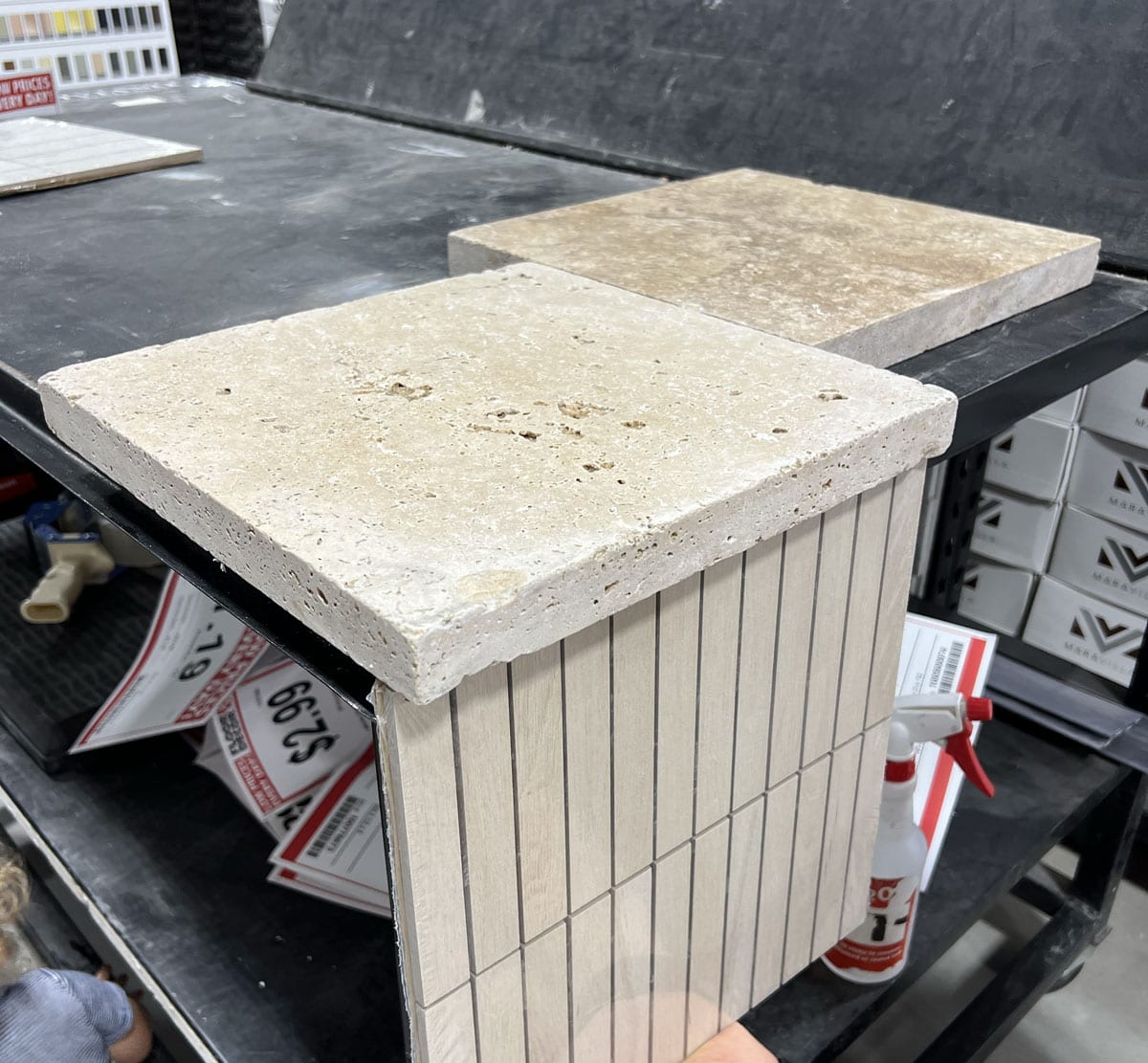
For the waterline tile, I chose this porcelain mosaic (cut it in half) that was a close match to the ivory coping.
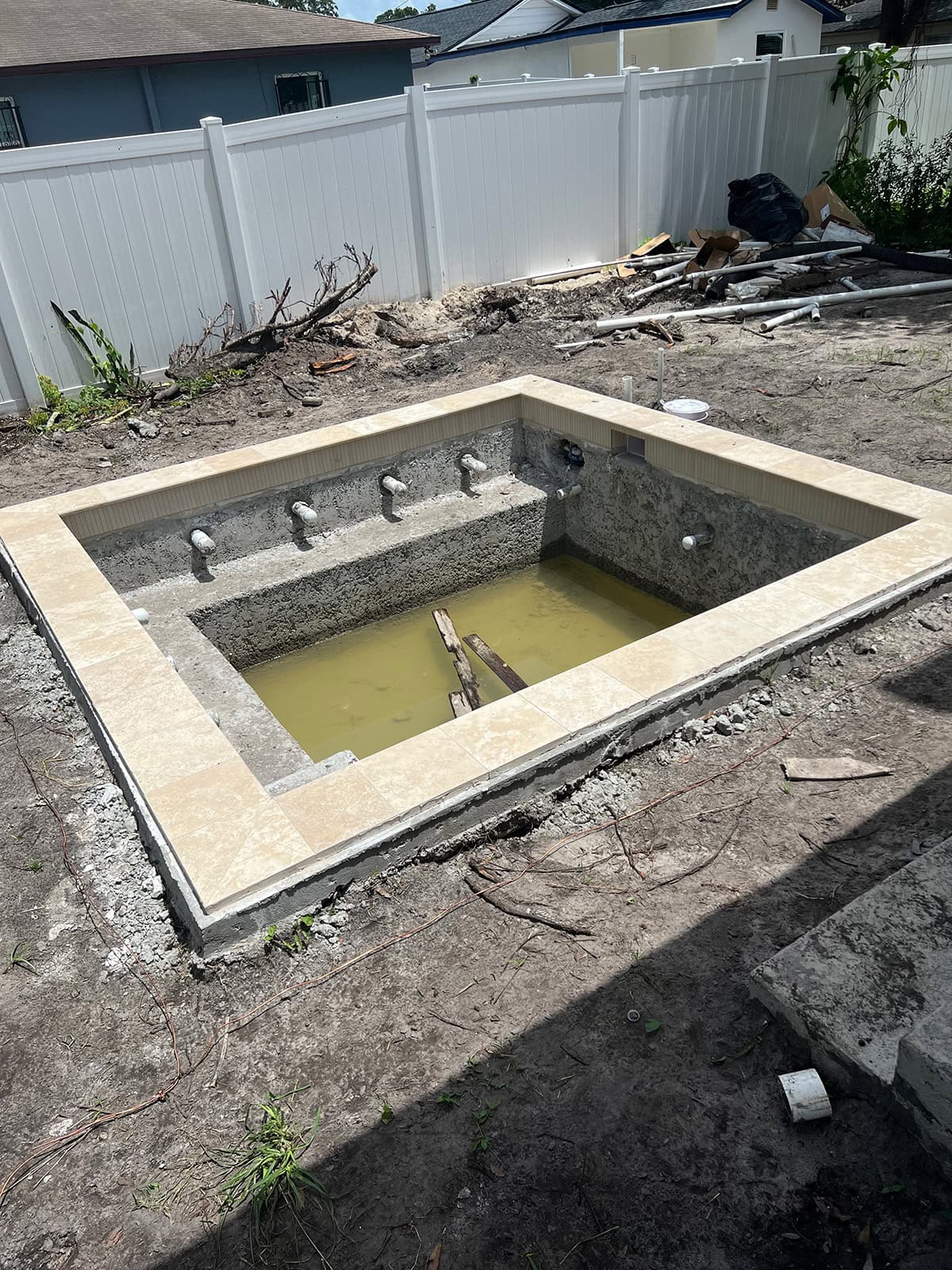
Another key decision was the surface finish and color. Our installer recommended PebbleTec, and I landed on their PebbleSheen finish in Desert Gold. This was also a risky move since there were very few real-life photos of it installed, and I started to wonder if I’d made a big mistake when the job started…

PebbleSheen uses smaller, polished pebbles and is smoother than the original PebbleTec texture. It’s a bigger investment but it’s super durable, non-slip, stain resistant, and can last well over 20 years.
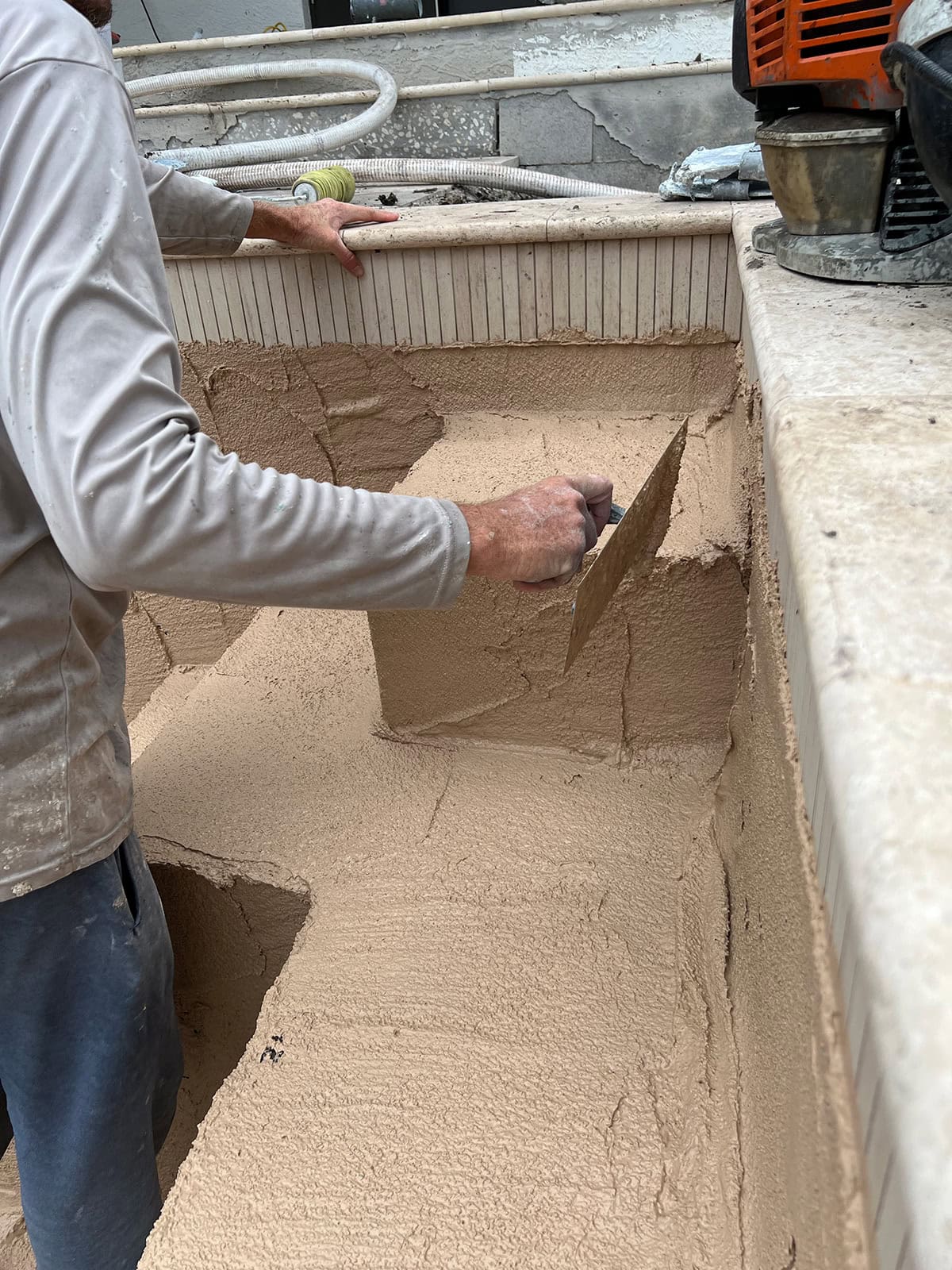
The aggregate is sprayed on and troweled by hand for a more organic, imperfect look. Once set, the excess cement is washed away to expose the stones and reveal the final finish.

The true test was how it would look after water was added, and I was on pins and needles as the spool was filled…

I’m thrilled to say that the result is exactly what I had envisioned for this space. It’s has that beautiful, natural Mediterranean beach feel.
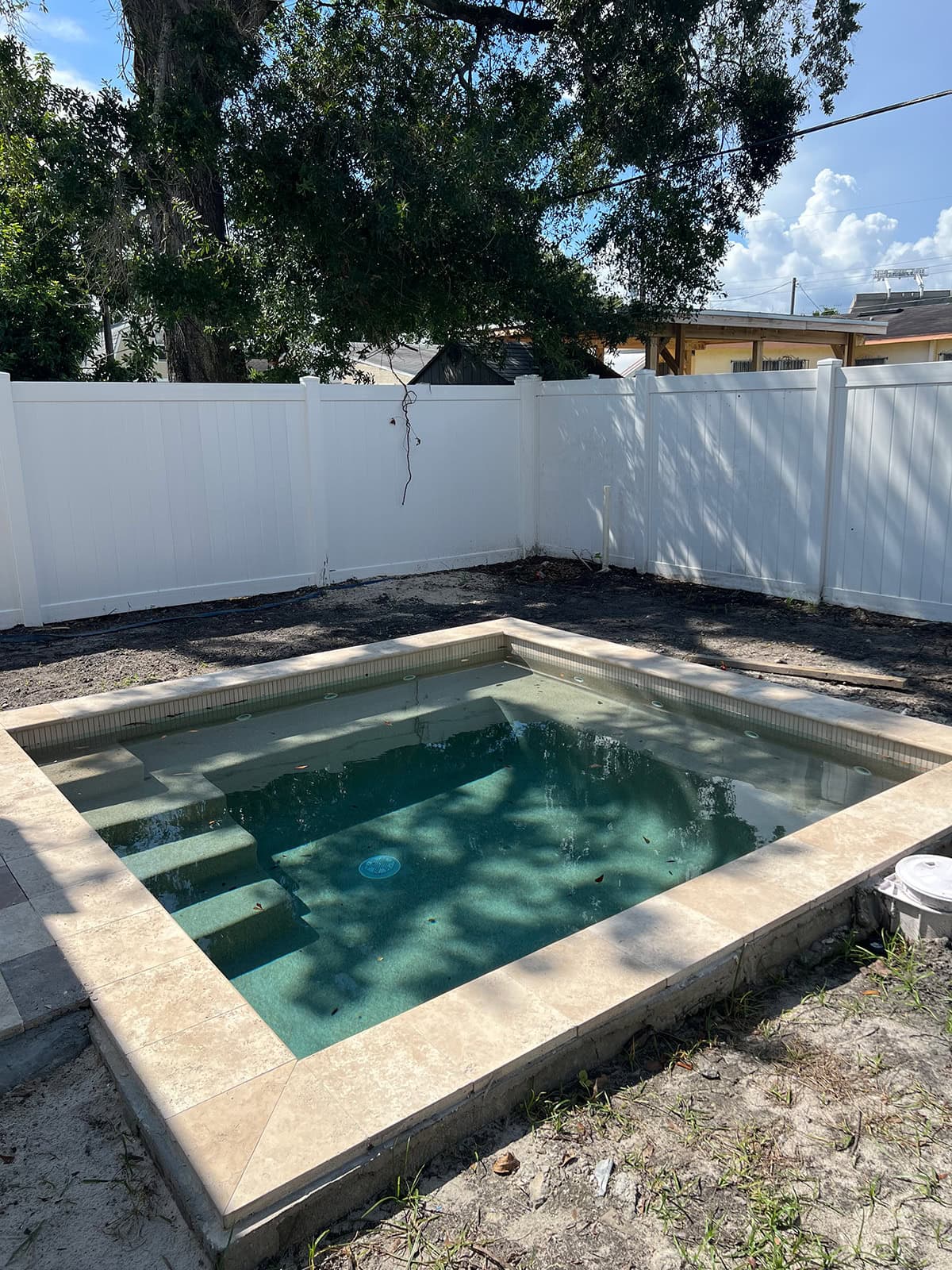
Depending on the lighting and conditions, the water color shifts from a crystal clear turquoise to a darker teal. We also opted for a saltwater system, which is gentler on your hair, skin, and eyes than traditional chlorine.
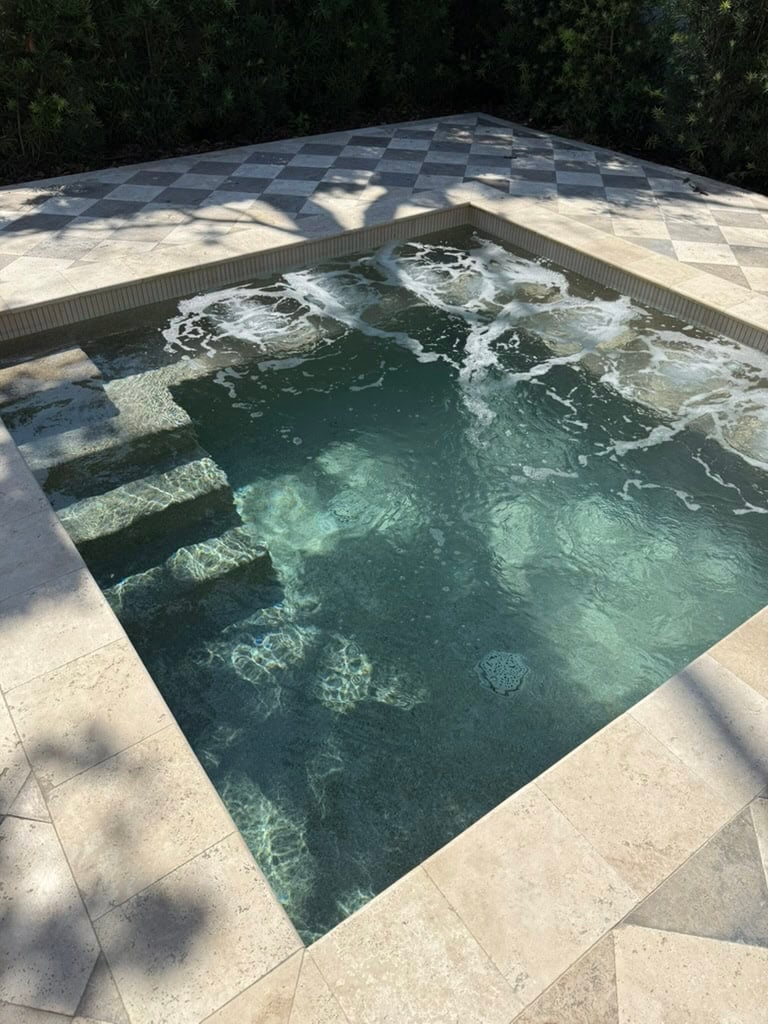
Here’s how the patio turned out right after install. We stained the darker (noche) pavers using Minwax Aged Barrel, grouted each one by hand to fill in the crevices, and sealed with a penetrating outdoor sealer. It was an incredibly time and labor intensive project, and I was cautiously optimistic it would last…

A year later, I’m gutted to report that the paver stain has almost completely faded. Re-staining regularly just isn’t feasible so I’m afraid it is what it is. Lesson learned: never order pavers (or tile of any kind) without seeing them in person first!
Since the house is not in service as a vacation rental yet, we’ve only used the spool a handful of times, and haven’t had to heat or cool it yet. We opted to install a reversible heat pump with a cooling function. It’s energy efficient, allows heating up to hot tub temperatures, and can cool to a refreshing ~15° below ambient temperature. For our use and climate, this was the right compromise.

A cooling feature isn’t necessary in every climate, but without one, our spool wouldn’t get below 90° during the summer here in Florida. In the colder months, we can turn on the heat pump and convert the spool into a spa, reaching temperatures over 100°.
Frequently Asked Questions
Wondering if a spool is right for you? Here are are all of your questions answered:
A spool is the combination of “spa + pool”, meaning a pool with jets that can be heated.
While the term is sometimes used to describe a “small pool”, a true spool is equipped with a heat pump and temperature controlled to serve as both a hot tub and a pool.
How big are spool pools?
Spools typically range in size from 6-8 feet wide and 10-16 feet long. The depth is similar to a hot tub at around 3-5 feet (often with a ledge for seating). Ours is 10’x10’x4’.
How much does a spool pool cost?
The cost of an in-ground spool pool depends on many factors including location, size and features, and typically ranges from $30-$75k+. Our 10×10’ concrete spool came in at $48k for everything—including permitting, coping/tile install, a heater/cooling pump, and automatic filler. 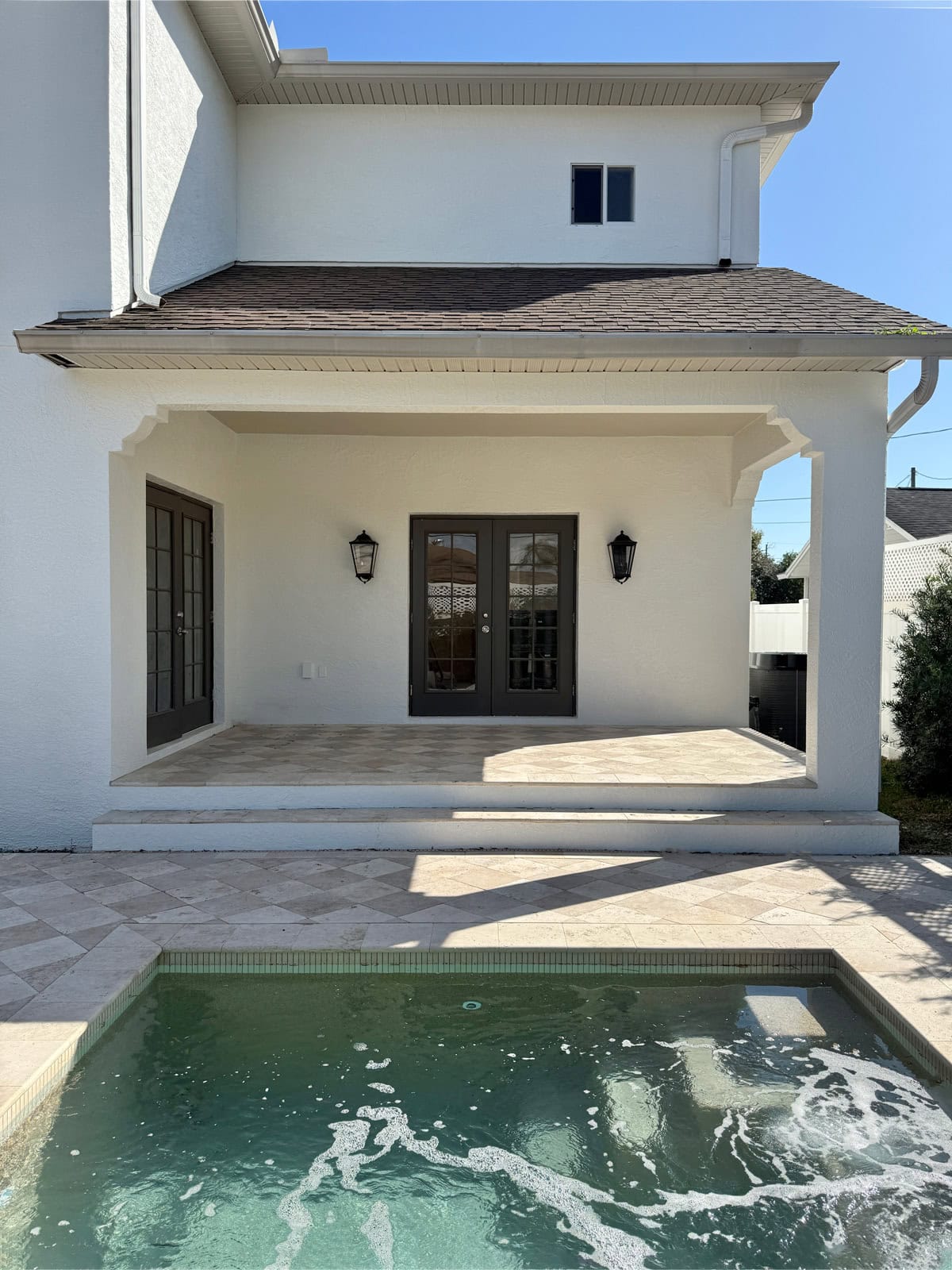
What does it cost to maintain a spool?
Maintaining a spool is generally cheaper than a full-sized pool because the lower water volume requires fewer chemicals and less energy to circulate. We hire a pool service company and pay $140 per month.
I can’t speak from personal experience on energy usage because we haven’t been heating or cooling ours yet. We have an electric heat pump, which is less expensive to run than a natural or propane gas heater. From my research, you can expect to spend slightly more than heating a standard hot tub: ~$20-$80/month with constant use (will report back once it’s in use!)
Standalone chillers are even more energy efficient and can cost less than $1 per day to run.
How hot and cold can a spool get?
A spool’s range will depend on the type of cooling and heating system it has, as well as the outside air temperature. Reversible heat pumps are most common (this is what we have), and can cool the water ~15° below the ambient temperature (typically 65°F to 75°F).
On the other hand, dedicated water chillers are designed to reach cold plunge temperatures between 40°F and 55°F.
Most spools can be heated to the same temperature as a hot tub, around 104°F.
How long does it take to heat and cool a spool?
Heating and cooling time depend on the equipment, size of the pool and outside air temperature. Gas heaters average from 5°F to 10°F per hour, about twice as fast as electric pumps, which can take up to 24 hours to reach maximum heat from a cold start. Update: it took our electric pump ~50 minutes to raise the temperature from 78° to 81°.
Cooling is generally a slower process, and most chillers/pumps typically lower the temperature by about 1°F to 2°F per hour.
What are the benefits of a spool?
A spool’s primary advantage is its year-round versatility: you can keep it chilled for a refreshing summer dip or heat it up for a relaxing soak during the colder months.
Because of its compact footprint, it fits easily into almost any backyard, while less water volume makes it both cheaper and easier to maintain than a traditional pool. The smaller size also makes it a more affordable alternative to a full size pool.
What are the drawbacks to a spool?
The biggest limitation is the size. While perfect for cooling off or socializing, spools don’t allow for activities like swimming or hosting larger gatherings.
If you’re using an electric heater, it’s important to know that they lose efficiency in colder weather, and stop working completely when it gets too cold (under 50°F) (we learned this the hard way when hosting a large group during a cold spell!)
Having a dedicated heating/cooling system also means more equipment, and more parts that can break.
What is the difference between a plunge pool, cocktail pool and a spool?
Plunge pools, cocktail pools and dipping pools are smaller than standard pools, and differentiated by their specific size and layout. Plunge pools are deeper for full immersion, while cocktail pools are shallow and designed for socializing.
Any of these smaller pools become a “spool” if you add jets and a heater.
Installing a spool was absolutely the right decision for us, and it’s the perfect choice for a vacation rental. If we ever get around to adding a pool in our own home, it will also be a spool! My only regret is not finding out about these sooner and installing one in the Hacienda (although we did retroactively add a pool heater after many guest requests).
As always, happy to answer any additional questions you have! Next up for this backyard: star jasmine wall trellis, climbing vines on the pergola, an outdoor kitchen and furniture. Continue to follow the progress on my Instagram as we tackle this transformation, one project a time…





Gabriel says
Where in Florida are you? We are in Santa Rosa Beach and are about to start the process of a spool.
Jenna Sue says
Tampa
Dayana says
I think the end result, even after the paver stain has faded, is beautiful. I actually prefer the more subtle variation in color.it feels much more natural and timeless. You did a great job.
How are you coming along with the porcelain tile selection for the waterline? My pool contractors almost always recommend the traditional glass mosaic look, but I would love to explore something different maybe a zellinge porcelain tile.They have mentioned other than glass mosaics can change appearance over time.
What has your experience been so far with porcelain waterline tiles? Have you found them to hold their color and finish well over the years?
Thanks!
Jenna Sue says
I do prefer the more subtle contrast too, just concerned it will fade even more and the pattern won’t be distinguishable. Time will tell!
I am happy with the porcelain waterline tile. I did notice the other day that there is a faint line along the waterline edge but I haven’t tried cleaning it yet. Porcelain is durable so hopefully it will clean up easily.
Meredith Ferguson says
This is so helpful!! We’re considering this very thing. What questions should we ask pool contractors we’re connecting with to ensure they understand all of these ins and outs of installing a spool. I want to be sure we choose the right partner. Thank you!
Jenna Sue says
I’d make sure they’ve installed them before in your area, and can guide you on the specific heating/cooling system that is ideal as they vary by climate. That along with the basics like the type of shell/construction they use, and the pool finish options. And of course, make sure to vet their reviews and previous work!
Michele M. says
WOW. Had no idea that something like that even existed! I had a really strong huge wonderful hot tub for years but sold it with my other house when I moved. I never replaced it but wow would this be neat to have. It’s perfect for a Florida home. But aren’t you worried someone will go out for some fresh air or a smoke (bleh) and walk right into it? Or a child? We have super strict HoA laws that dictate we must have metal decorative (ie “approved”) fencing year round any underground pools or hot tubs. Above grounds not allowed at all. You don’t have anything like that there? Or is the property fence enough? Just curious. But I still love it – and pray no one EVER gets hurt not seeing where they are going. I can imagine you have thought of this, of course, and have good lighting. Thanks for the info. It’s awesome.
Jenna Sue says
Hi Michele, I agree it is such a great solution and surprised they aren’t more popular! No concern with adults as it is only 4′ deep with plenty of space around it. We do have a fully fenced in yard with self locking gates to prevent anyone walking in from the outside. We also have an optional pool alarm a guest can use if they want to, but our properties are catered more towards adult groups. The space will be clearly advertised in the listing so families can decide if it’s suitable for themselves before booking.